 Dorry Archiles
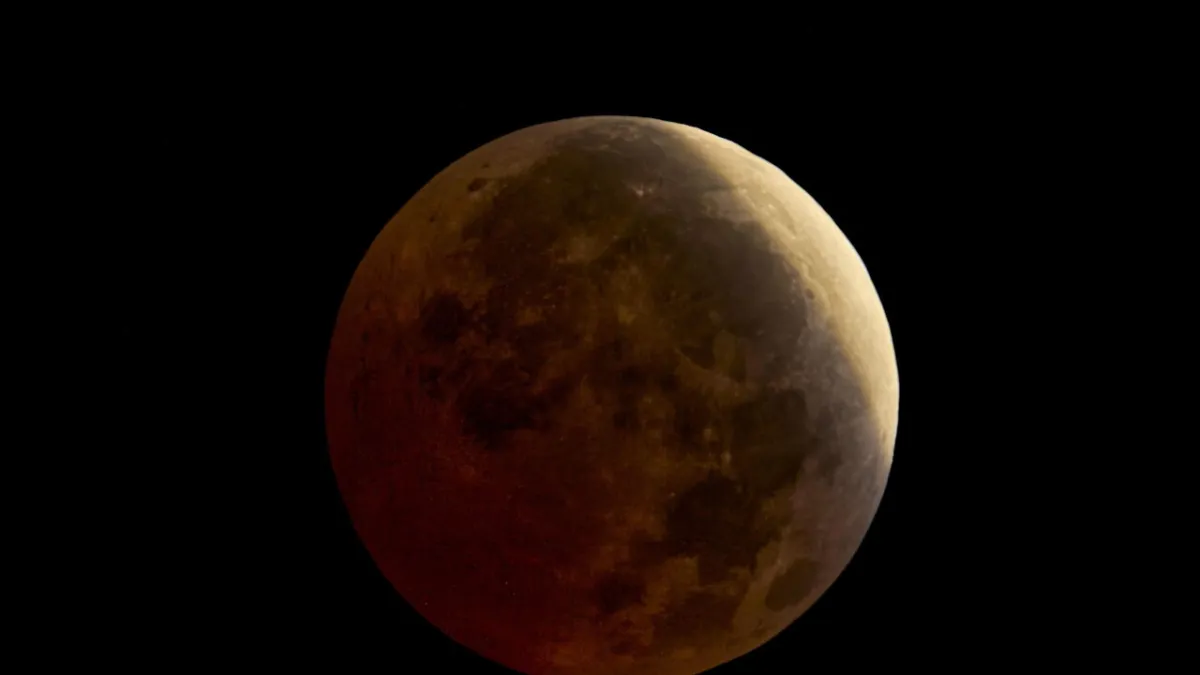
ROME – On the early morning of Thursday, May 12, 2026, the skies above Italy presented a rare and mesmerizing spectacle: a partial lunar eclipse dominated by a stunning blood-red hue. This astronomical phenomenon, which saw 96% of the lunar disk enveloped by Earths umbral shadow, captivated millions who rose early to witness its grandeur.
The lunar eclipse lasted for several hours, reaching its peak around 4:30 AM local time, showcasing a Moon that appeared to 'bleed' over the western horizon. This red color emerged due to the scattering of sunlight by Earths atmosphere, which then reached the Moons surface, a process long understood by science.
Astronomers and space enthusiasts across the country had eagerly anticipated this moment. Prof. Giovanni Rossi from the Astrophysical Observatory of Milan explained that Earths atmospheric conditions significantly influence the intensity of the red color observed. The more volcanic dust or particles in Earths atmosphere, the darker and more intense the red reflected by the Moon will appear, stated Prof. Rossi, highlighting the complexity of this phenomenon.
Communities in various cities, from Rome to Venice and Naples, gathered at prime viewing spots. Several stargazing groups even organized special events, providing telescopes for residents eager to observe the partially illuminated lunar surface in greater detail, creating a unique sense of togetherness.
The red or brownish-orange color of the Moon occurs due to a phenomenon called Rayleigh scattering. Blue and green light from the solar spectrum are scattered more extensively by Earths atmosphere, while red and orange light successfully penetrate and refract towards the Moon, providing a dramatic visual effect.
Although lunar eclipses are regular occurrences, an eclipse with Earths shadow covering up to 96% as seen on May 12, 2026, is considered quite rare and always holds a special fascination. A similar event was last clearly visible in Europe several years ago, making this moment particularly special for many observers.
This phenomenon became a haven for astrophotographers. Thousands of photos of the red Moon flooded social media, showcasing the beauty and uniqueness of the event from various perspectives. Many captured the Moon against the iconic backdrops of Italian cities, creating stunning works of art.
Unlike a total lunar eclipse where the entire Moon enters Earths umbra, this partial eclipse still left a small portion of the Moon uncovered by the shadow. Nevertheless, the red effect remained dominant and captivating, offering a profound visual experience.
Following this lunar eclipse, the astronomical community in Italy and worldwide awaits several other sky events throughout 2026, including the spectacular Quadrantid meteor shower and an annular solar eclipse later in the year, promising more cosmic wonders.
Observatories and planetariums across Italy utilized this moment for public education. They conducted Q&A sessions and presentations on the solar system, planetary positions, and the importance of preserving Earths environment, which affects the quality of astronomical observations, fostering young peoples interest in science.
Editorial Insight: This celestial event underscores the enduring public fascination with astronomical phenomena and scientific discovery. Technological advancements in photography and social media allow for the instant global sharing of such wonders, inspiring a collective appreciation for the cosmos. The occurrence also serves as a subtle reminder of Earths atmospheric health, directly impacting how we perceive these distant marvels.