 Stefani Rindus

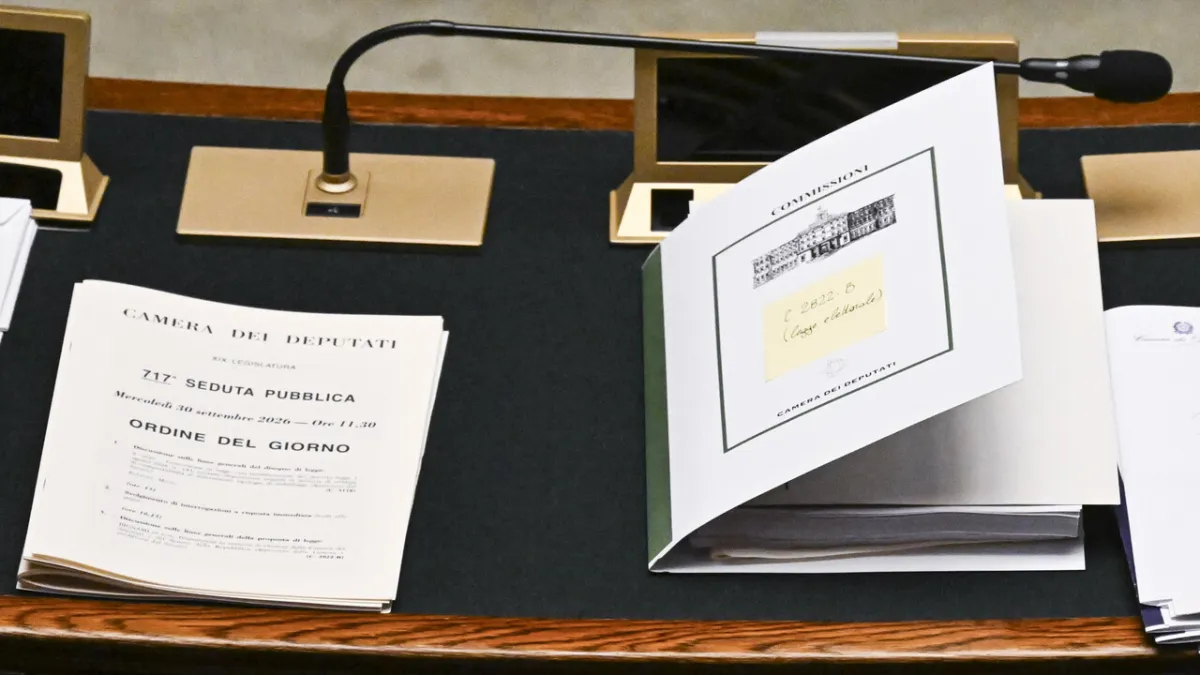
ROME – The Italian Parliament is in turmoil as it addresses the final debate on a crucial electoral law bill. The secret ballot is not scheduled to take place before 12:30 PM local time, marking the culmination of a series of fierce debates involving key political figures such as Giuseppe Conte and Elly Schlein. This reform is expected to fundamentally alter the political landscape of the 'boot-shaped country'.
This electoral law bill has undergone extensive debate in various legislative committees. Its urgency lies in the attempt to create a more stable and representative system, responding to the frequent government changes and fragile coalitions in Italy's political history.
Legislators are now entering the phase of declarations of vote, a parliamentary procedure where each faction or member provides reasons behind their voting choice. This is a crucial moment to state positions and assert political views before the public and fellow parliamentarians.
Giuseppe Conte, former Prime Minister and leader of the Five Star Movement (M5S), is listed as one of the main speakers. His party, which has a history of reformist views on the political system, is expected to voice specific concerns or support regarding the implementation of this new law.
Similarly, Elly Schlein, Secretary of the Democratic Party, is also scheduled to deliver her speech. As one of the central opposition figures, Schlein's views will significantly influence the public narrative and potentially direct her party block's votes in the upcoming ballot.
The tension is palpable in the parliamentary chamber. A secret ballot system has been chosen for several key articles of the bill, indicating the sensitivity and potential divergence of views even within a single political faction. This allows each parliamentarian to vote according to their conscience without excessive public or party pressure.
Political observers highlight that the outcome of this vote will have long-term implications for governmental stability in Italy. A strong and fair electoral system is an essential pillar of democracy, and Italy has often struggled with this issue.
If this reform is successfully passed, it is expected to minimize political fragmentation and facilitate the formation of more robust governments. However, critics argue that the proposed changes could potentially favor certain factions, sacrificing minority representation or political diversity.
Debates surrounding electoral law have always been sensitive in Italy, given various past reform efforts that often failed or did not yield the expected stability. Therefore, this moment is considered the 'final challenge' for the country's political system.
The Italian public, often skeptical of the political elite, is closely monitoring this process. Hopes for significant improvements in state governance clash with concerns about possible political maneuvers that only benefit a select few.
The implications of this law will not only be felt at the national level but could also affect Italy's position within the European Union. Domestic political stability is crucial for the country's credibility and influence on the international stage.
This entire legislative process will reach its climax after 12:30 PM, when the secret ballot will commence. Every vote cast will determine the future direction of Italian politics in the years to come.
Editorial Insight: The final debate on Italy's electoral law is not merely a regular legislative procedure; it is a reflection of the nation's protracted struggle to find a formula for political stability. The presence of figures like Conte and Schlein underscores how central this issue is to the dynamics of power. The outcome of the secret ballot will be an important barometer for Italy's capacity for political consensus and could determine whether the country moves towards an era of more stable governance or again plunges into the legislative uncertainty that has often occurred. The consensus or polarization that emerges will significantly shape the face of Italian democracy going forward.