 Angela Stefani
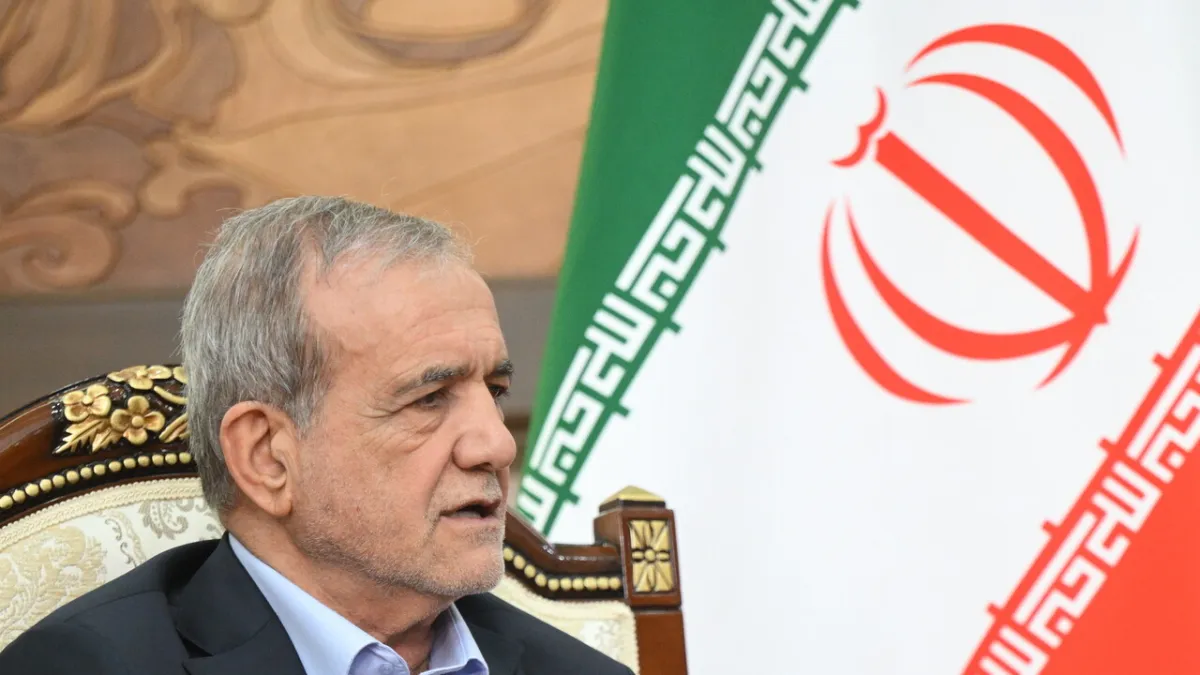
Tehran – Iranian President Pezeshkian recently asserted that his nation will never succumb to pressure and intimidation from the United States. This resolute statement, delivered by Pezeshkian, underscores Iran's unwavering commitment to persistently champion truth and justice on the international stage, amidst escalating geopolitical tensions in 2026.
Pezeshkian, in his profoundly significant address, explicitly declared, 'As long as we live, we will pursue truth and justice.' This statement reaffirms Iran's uncompromising stance against external forces, particularly Washington, which has consistently imposed various sanctions and diplomatic pressures.
The relationship between Iran and the United States has long been marked by turmoil and mistrust. A prolonged history of economic sanctions, harsh rhetoric, and interventions in the region has created a deep chasm between the two nations. Pezeshkian's declaration reiterates Iran's narrative of resistance against a global hegemony it perceives as unjust.
This stance undoubtedly carries significant implications for regional and international dynamics. It solidifies Iran's position as a regional power that consistently opposes what it identifies as unilateral Western policies. Such a declaration has the potential to provoke further responses from Washington and its allies in the Middle East, intensifying an already strained geopolitical atmosphere.
Iran, as a key actor in the Middle East, plays a central role in various crucial issues. From its support for resistance groups in Yemen and Lebanon to its nuclear program ambitions, which remain under global scrutiny, every statement from the Iranian leadership is closely monitored by the international community.
Similar tensions are evident in incidents such as the drone attack on a Saudi pipeline, an event that highlights the vulnerability of vital infrastructure in the region and the potential for conflict escalation. Iran is often implicated, though Tehran consistently denies such accusations.
The impact of economic sanctions has posed severe challenges for Iran, compelling the nation to devise innovative strategies to maintain internal stability and economic viability. Diversification of trade partners, development of domestic capabilities, and strengthening regional alliances are part of Iran's efforts to counteract isolation.
For Tehran, the 'intimidation' perpetrated by the United States manifests in various forms: crippling economic sanctions, military threats near its borders, and demonizing political rhetoric. All these are viewed as systematic attempts to undermine Iran's sovereignty and independence.
The narrative of 'pursuing truth and justice' forms the philosophical foundation of Iran's foreign policy. This is understood not only as resistance against external pressures but also as an endeavor to create a more equitable and balanced world order, free from the dominance of a single superpower.
The administration of US President Donald Trump has consistently maintained a firm approach toward Iran. Trump's re-launched 'maximum pressure' policy has exacerbated polarization and narrowed the scope for constructive dialogue between the two nations.
This firm approach also recalls the dynamics when Prince Salman of Saudi Arabia urged Trump to attack the Houthis, illustrating the complex nature of US and its allies' involvement in the Middle East. Washington's decision to prioritize intelligence indicates deep strategic considerations.
On the global stage, Iran is not the only nation facing pressure from major powers. History records numerous instances of countries striving to maintain their sovereignty and identity amidst geopolitical rivalries. Iran's stance reflects a spirit of resistance frequently observed in nations that feel threatened by hegemony.
Iran's long-term strategy in confronting international isolation and pressure includes strengthening regional alliances, developing independent technology, and enhancing defense capabilities. This is an effort to ensure the nation can stand firm without compromising its fundamental principles.
Editorial Insight:
President Pezeshkian's statement is more than mere political rhetoric; it reflects Iran's consistent strategy to maintain its autonomy in the face of global pressure. While tensions may potentially rise, Tehran seemingly calculates that this firm stance will actually bolster its bargaining position among regional and global allies who also oppose the dominance of a single superpower. The future of Iran-US relations will heavily depend on how Washington responds to this declaration, with the risk of escalation always looming.