 Gabriella
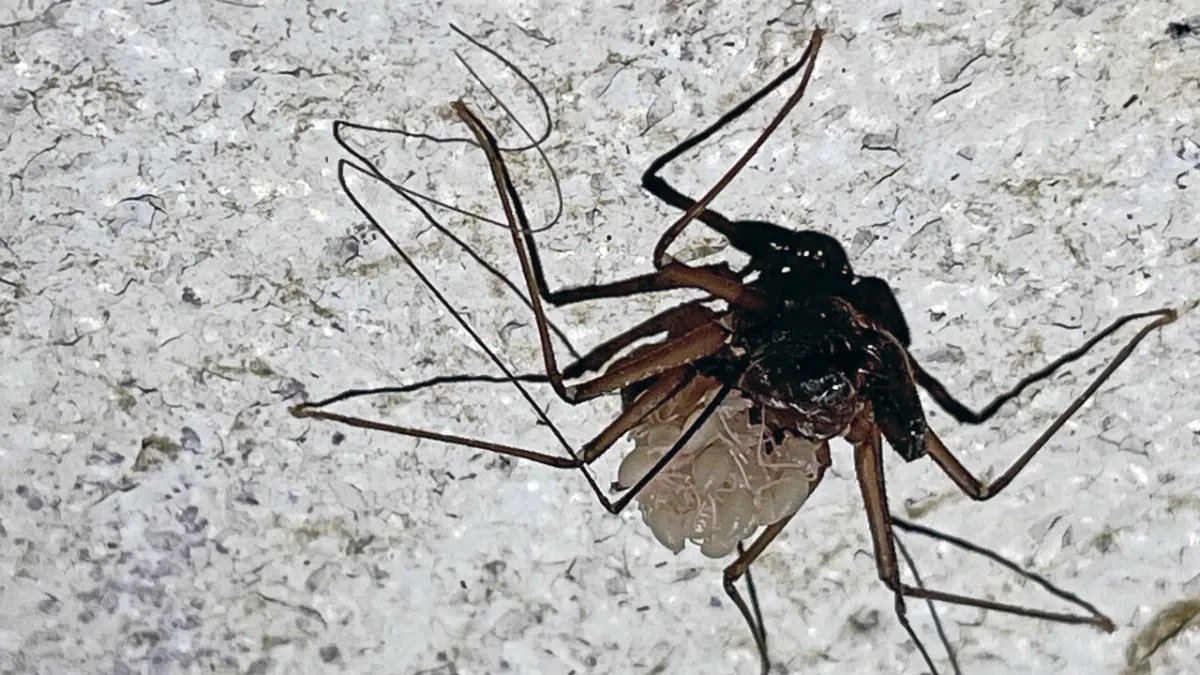
TRIESTE – A surprising discovery recently emerged from the historic underground bunker complex Kleine Berlin in Trieste, Italy. A rare female Amblypygi spider was observed carrying her young on her back, reaffirming the presence of this mysterious species within the unique ecosystem of the former World War II air-raid shelter. This vital observation offers new insights into the resilience of biodiversity in unexpected urban environments.
The incident was reported by local site managers and researchers who regularly monitor the artificial cave system. The female spider was seen moving slowly, protecting dozens of young clinging tightly to her body, a characteristic reproductive behavior of Amblypygi species. This sighting is not only captivating but also crucial for conservation efforts.
Amblypygi, often referred to as whip spiders, are not true spiders but a distinct order of arachnids. They are characterized by their long, whip-like front legs, used for sensing their environment and hunting. These nocturnal creatures tend to inhabit dark, humid places such as caves, rock crevices, or, in this case, underground bunkers.
The Kleine Berlin complex itself is a labyrinth of tunnels built during World War II as an air-raid shelter and command post. Located deep beneath the city of Trieste, the bunker provides stable microclimatic conditions—dark, humid, and with constant temperatures—ideal for the survival of Amblypygi and other troglophilic fauna.
The presence of an Amblypygi population in Kleine Berlin has been a subject of scientific interest for some time. The discovery of a female with her young indicates that the species is not only surviving but also successfully reproducing, demonstrating the vitality of this isolated subterranean ecosystem. This highlights the remarkable adaptation of living creatures to hidden, man-made habitats.
Biologists have welcomed this report as important evidence of the need to preserve historical sites like Kleine Berlin, not just for their historical value but also as micro-nature reserves. The reproduction of Amblypygi spiders in this location signifies a healthy food chain and a relatively stable ecosystem, far from surface disturbances.
Amblypygi spiders are known for their maternal care. The female carries all her eggs in an egg sac attached to her body. After hatching, the young spiders climb onto their mother's back and hitch a ride for the first few days or weeks of their lives, protected from predators and environmental hazards.
This discovery also prompts further research into the biodiversity that might still be hidden within the underground networks of ancient European cities. Every dark passage or artificial cave could potentially harbor unique species that are yet to be identified or known only from small populations.
Trieste, as a strategic port city with a rich history in northeastern Italy, continues to hold surprises. From the majestic Habsburg-era architecture to its mysterious underground networks, the city is a unique blend of human civilization and unexpected wild nature.
This finding adds to the long list of hidden treasures in Italy, a country that continually captivates the world with its boundless cultural and natural heritage, even amid contemporary challenges such as the threat of a national railway strike in September 2026. Efforts to protect this specific ecosystem will be key to its sustainability.
Editorial Insight: The discovery of Amblypygi spider reproduction in the Kleine Berlin bunker underscores the unexpected role of historic sites as sanctuaries for rare species. This is more than just fauna news; it is a symbol of life's adaptation and a reminder that conservation must extend beyond national parks, encompassing every hidden corner around us. The implications are broad, from potential biomedical research to public education about the importance of every life form.