 Robert Andrison
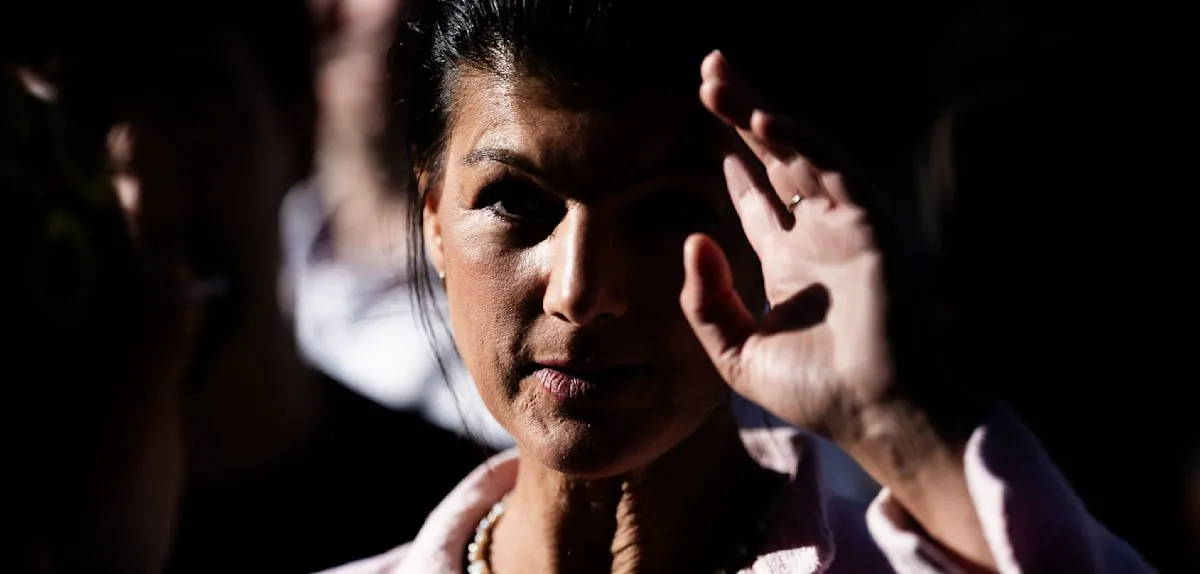
BERLIN – The founder of the BSW (Bundnis Sahra Wagenknecht) alliance, Sahra Wagenknecht, has recently issued a provocative challenge to the prominent political figure Bjorn Hocke for a live debate duel. This offer is closely tied to Wagenknecht's vision for a non-partisan head of government in the German state of Thuringia, aiming to achieve political stability amidst complex electoral dynamics.
Wagenknecht, known for her sharp rhetorical style, specifically invited Hocke with a pointed statement. You, who place such high value on masculinity, Wagenknecht stated, translating her original call. This challenge is not merely an invitation to argue, but a strategic maneuver to highlight fundamental differences in approaches to leadership and governance.
The BSW alliance itself was established by Sahra Wagenknecht on a platform that often blends elements of left- and right-wing policies, positioning it as a unique political force in Germany. The primary goal of BSW is to represent voices that feel marginalized by traditional parties and to offer pragmatic solutions for national issues.
Bjorn Hocke, on the other hand, is a prominent figure within Germany's right-wing political spectrum, particularly in the state of Thuringia. He is often associated with narratives that emphasize traditional values and national identity. Wagenknecht's debate challenge directly targets Hocke's reputation as a strong and decisive leader.
Wagenknecht's idea of a non-partisan head of government for Thuringia emerges as a response to deepening political polarization. According to her, this approach could serve as a bridge for various political factions to cooperate for the benefit of the people, without getting entangled in narrow partisan interests.
Thuringia itself faces significant political challenges, often characterized by parliamentary fragmentation and difficulties in forming stable coalitions. Under these conditions, Wagenknecht's proposal offers a radical alternative, which could potentially break deadlocks or even spark a more intense debate about the future direction of German democracy.
A debate duel of this nature has the potential to reshape the political landscape of Thuringia and even Germany as a whole. This moment is not just about a clash of visions between two individuals, but also about the debate concerning the most effective model of governance amidst global and domestic challenges in 2026.
Political observers in Berlin believe that Wagenknecht's offer is a bold move that could elevate BSW's profile while simultaneously pressing Hocke to demonstrate substance behind his rhetoric. It also serves as a test of both parties' capacity to engage in constructive argumentation in the public sphere.
Political upheavals in Germany are often marked by calls for reconciliation or fundamental changes in governance. Previously, for instance, the issue of a 'new political wall' in Germany also arose in several public discussions (Read also: Banaszak Urges CDU: Do Not Build a New Wall in German Politics).
Public debate is the essence of democracy. Such moments provide citizens with the opportunity to directly witness how their leaders confront crucial issues and test the ideas they champion. The hope is that the duel between Wagenknecht and Hocke can enrich political discourse and encourage active public participation.
The realization of a non-partisan head of government will certainly not be easy. It requires cross-party consensus and a strong commitment to set aside sectoral egos. This is a major challenge that will demand tough negotiations and massive public support to be realized in Thuringia.
Editorial Insight: Sahra Wagenknecht's debate challenge to Bjorn Hocke is a shrewd political maneuver, leveraging Hocke's perceived masculinity to push for a substantive debate on the future of Thuringia's government. The idea of a non-partisan head of government, though radical, reflects frustration with acute political polarization. If realized, this debate has the potential to become a significant turning point in German politics, testing the maturity of democracy and leaders' ability to compromise for the greater good.