 Chris Robert
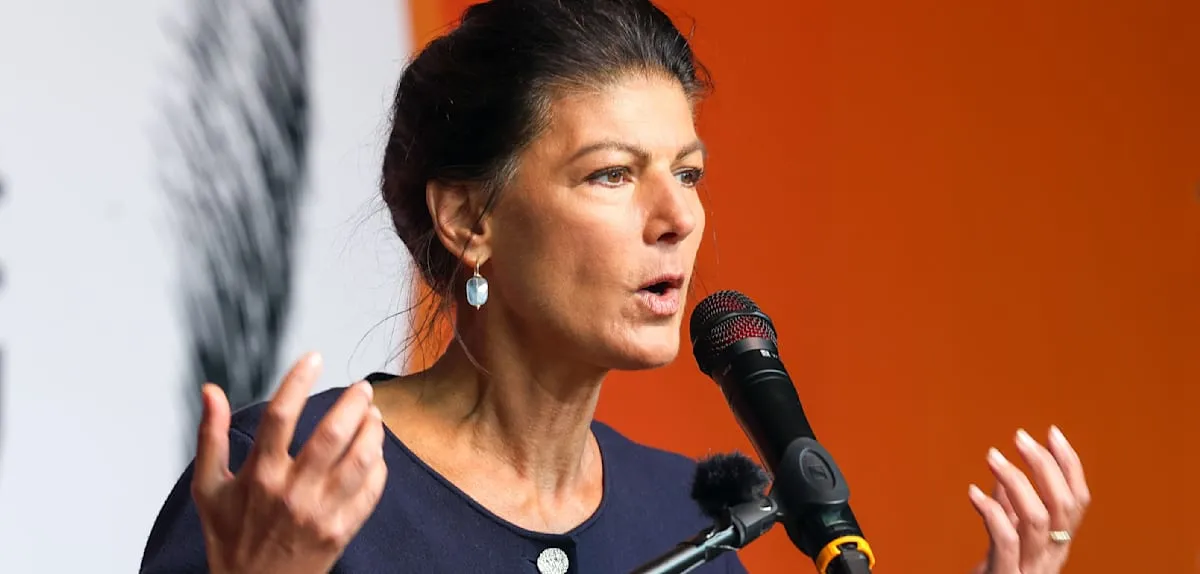
BERLIN — Sahra Wagenknecht, leader of the Bündnis Sahra Wagenknecht (BSW) party, has vocally criticized the public reaction to an incident involving the singing of the East German (DDR) anthem at a recent Alternative for Germany (AfD) party event in Germany in 2026. According to her, the real scandal does not lie in the act of singing the song, but rather in the media and opinion climate that is pushing more and more citizens to recall the DDR era.
Wagenknecht's comments come amidst widespread outrage following reports of AfD event attendees chanting "Auferstanden aus Ruinen," the national anthem of the defunct German Democratic Republic. This incident has sparked a fierce debate about the use of historical symbols and their relevance in contemporary political discourse.
In her statement, Wagenknecht firmly defended the right of individuals to sing any song, including the DDR anthem. She emphasized that attempts to scandalize such actions merely divert attention from deeper, underlying issues within German society.
"Whoever wants to sing the DDR anthem, let them do it," said Wagenknecht, highlighting what she perceives as a double standard in public discourse. For her, the focus should be directed at why parts of society feel alienated or dissatisfied with current conditions, thus being prompted to look back at the past.
As a central figure in the German political landscape of 2026, Sahra Wagenknecht and her party, BSW, are known for their positions that often diverge from the mainstream. This statement underscores BSW's view that a more honest and open discussion about social and political challenges is needed, free from excessive censorship or judgment.
The use of the DDR anthem often triggers controversy due to its association with a repressive socialist regime. However, for a small segment of German citizens, particularly in the former East German territories, the song can also evoke nostalgia or at least memories of a past identity.
Through her sharp criticism, Wagenknecht indicated that a media and opinion climate prone to judgment or polarization can create resonance for pre-reunification conditions. She argues that the dominant narrative currently fails to embrace the complexity of public sentiment and views.
"This is the real scandal, that more and more people, given the media and opinion climate, apparently have to think back to DDR conditions," she added, reinforcing her argument that there is a collective failure to address public dissatisfaction constructively.
This perspective also touches upon a broader debate about freedom of expression in Germany, a country with a complex history of restricting certain symbols to preserve democratic values and reject extremism. However, Wagenknecht contends that such restrictions might go too far and be counterproductive.
Some political observers view Wagenknecht's statement as a strategic attempt to gain sympathy from segments of society that feel unrepresented, including those who may hold different views on German history and identity. It also highlights the ongoing political fragmentation in Germany in 2026.
Wagenknecht's criticism echoes concerns about deepening polarization in German politics, where parties like the AfD continue to gain support. Issues such as immigration, the economy, and national identity have become intense ideological battlegrounds. To further understand the internal dynamics within the AfD, you can read our article on German Political Storm: AfD NRW Leader Shakes Alice Weidel's Leadership.
Ultimately, the DDR anthem singing incident and Sahra Wagenknecht's response open a crucial dialogue about how Germany, in 2026, confronts its historical legacy while striving to build social cohesion amidst an increasingly complex media and political landscape.