 Debby Wijaya
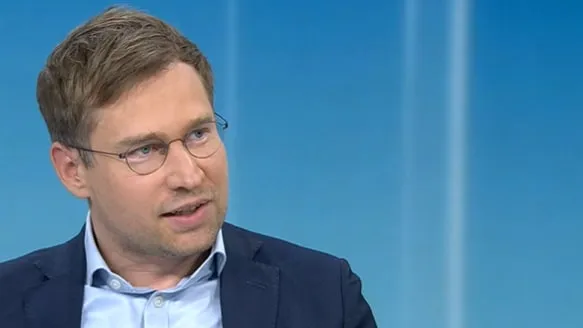
BERLIN — Stefan Evers, a senior politician from the Christian Democratic Union (CDU) party, has officially assumed the position of lead candidate for the Berlin election following the abrupt resignation of Kai Wegner. This appointment in 2026 comes amidst significant local and national political upheaval, placing the CDU at a crossroads with formidable electoral challenges. The party currently languishes in fourth place with only 17 percent support, a clear alarm signal for one of Germany's traditional political forces.
Kai Wegner's resignation, who previously served as a key figure in Berlin's political landscape, created an urgent leadership vacuum. While the detailed reasons for his departure were not fully disclosed to the public, speculation arose regarding internal pressure and the party's sluggish performance. This incident adds complexity to the CDU's efforts to maintain its relevance in the German capital.
Stefan Evers now bears the heavy task of restoring public trust and reversing the negative narrative surrounding the party. As a political veteran, he is expected to bring new experience and strategies to confront the fierce contest ahead.
Sebastian Geisler, political editor for the Bild newspaper, highlighted the main dilemma facing Evers. "The main problem for him is the starting position. The CDU is at 17 percentage points, in fourth place," Geisler stated, underscoring the critical nature of the situation for the party. This statement simultaneously illustrates the scale of the challenges Evers must tackle in the coming months.
The grand narrative espoused by the CDU, "Elect us again, otherwise it will get even worse," reflects the party's attempt to capitalize on voters' anxieties about Berlin's stability and future. This strategy, though risky, is a last-ditch effort to re-engage alienated or apathetic voters.
The CDU's standing in Berlin has experienced highs and lows over the past several decades. From strong dominance to becoming a supporting force, these fluctuations demonstrate the highly fluid political dynamics of the city. This drastic decline to 17 percent marks one of the lowest points in the party's history in the region, demanding deep evaluation and a swift response.
Evers not only faces challenges from unsatisfactory poll results but also intense competition from other parties in Berlin whose popularity is on the rise. Left-leaning parties and the Greens, in particular, have successfully attracted the sympathy of young and urban voters, eroding the CDU's traditional support base. Coalition dynamics and potential post-election alliances are also vital strategic considerations.
Furthermore, criticism of the previous leadership by various parties, including artists and activists, further muddied the political waters. A Berlin actor, for instance, had "harshly criticized Kai Wegner's controversial politics in 2026" at a prestigious event, indicating how CDU policies under Wegner had come under public scrutiny. This becomes an additional burden Evers must overcome to build a new image.
Evers' likely strategy will involve emphasizing crucial issues for Berlin residents, such as affordable housing, efficient public transport, and urban security. By presenting concrete solutions and a clear vision, Evers hopes to win back skeptical voters and bring new optimism to the CDU.
The CDU's trajectory in Berlin has implications far beyond the city limits. As Germany's capital, election results here are often considered a barometer of national political sentiment. A poor performance could send waves of concern to the party's federal headquarters, affecting national strategy and leadership.
The Berlin public, known for its critical and political engagement, now awaits Stefan Evers' concrete steps with bated breath. How he will navigate the legacy of Wegner's resignation, reform party structures, and craft an effective campaign will determine not only the fate of the CDU in Berlin but also the stability of Germany's political landscape as a whole heading into the upcoming election.
BERLIN — Stefan Evers' appointment as the CDU's lead candidate for the 2026 Berlin election is not merely a personnel change but a significant gamble for the party's future. Tasked with delivering change and restoring electability, all eyes are on how Evers will navigate these turbulent political waters.