 Chandra Wijayanto
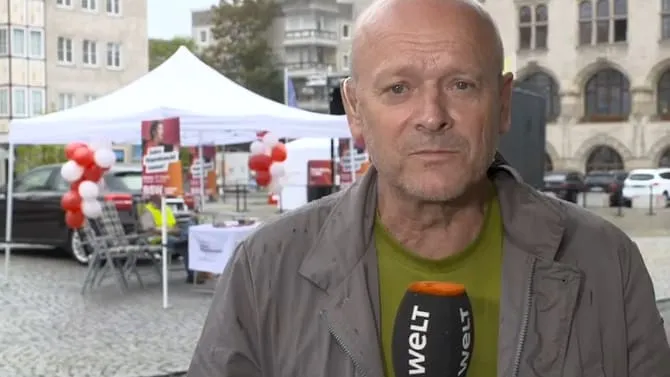
DESSAU – Bundnis Sahra Wagenknecht (BSW) has officially launched its election campaign in Saxony-Anhalt, Germany. The newly established party faces a significant challenge to surpass the five-percent hurdle, which is crucial for its political survival at the state level.
Recent poll data indicates BSW is struggling, hovering close to this vital threshold. This situation places the party and its founder, Sahra Wagenknecht, in a precarious position ahead of election day, which will determine their future in Germany's political landscape in 2026.
Sahra Wagenknecht, the central figure lending her name to the alliance, is the primary driving force. Her charismatic presence and sharp rhetoric are vital assets in attracting voters who yearn for an alternative to the established parties.
Lutz Stordel, a political observer, highlights Wagenknecht's success in building a support base through an anti-CDU approach. This strategy has proven effective in appealing to segments of the electorate who feel unrepresented or disillusioned with the Christian Democratic Union's policies.
Wagenknecht's anti-CDU stance is more than just criticism; it offers a counter-narrative that resonates with certain segments of German society. This creates a polarization that redefines campaign dynamics, particularly in regions like Saxony-Anhalt.
Germany has a long history of multi-party systems, and state elections often serve as a barometer for national sentiment. BSW's struggle in Saxony-Anhalt is therefore not merely a contest for local seats, but also an indicator of their potential strength in the federal arena, considering issues like tax reforms that previously divided the coalition.
Despite gaining momentum, BSW must still overcome structural barriers and public perception. Their success will heavily depend on their ability to convert sporadic support into actual votes at the ballot box, as well as the effectiveness of their campaign messages.
The five-percent hurdle is not merely a number, but a gateway to parliamentary representation. Failing to reach it means that collected votes will not be counted, eliminating the party's chance to directly influence policy and receive public funding.
Smaller or newer parties often face similar challenges in the German political system, which is dominated by major powers. BSW's story could set an important precedent, both as a model of success and a warning of the difficulties encountered.
With the campaign underway, the focus now shifts to BSW's ability to maintain momentum, mobilize voters, and prove that their platform is more than just a reaction to the existing political status quo.
Editorial Insight: BSW's struggle in Saxony-Anhalt illustrates the dynamic nature of German politics in 2026. With increasing polarization, Sahra Wagenknecht's ability to retain her base through anti-establishment rhetoric will be key. The outcome of this election will not only determine BSW's fate but also has the potential to shift coalition landscapes and the balance of political power in Germany in the long term.