 Angel Doris
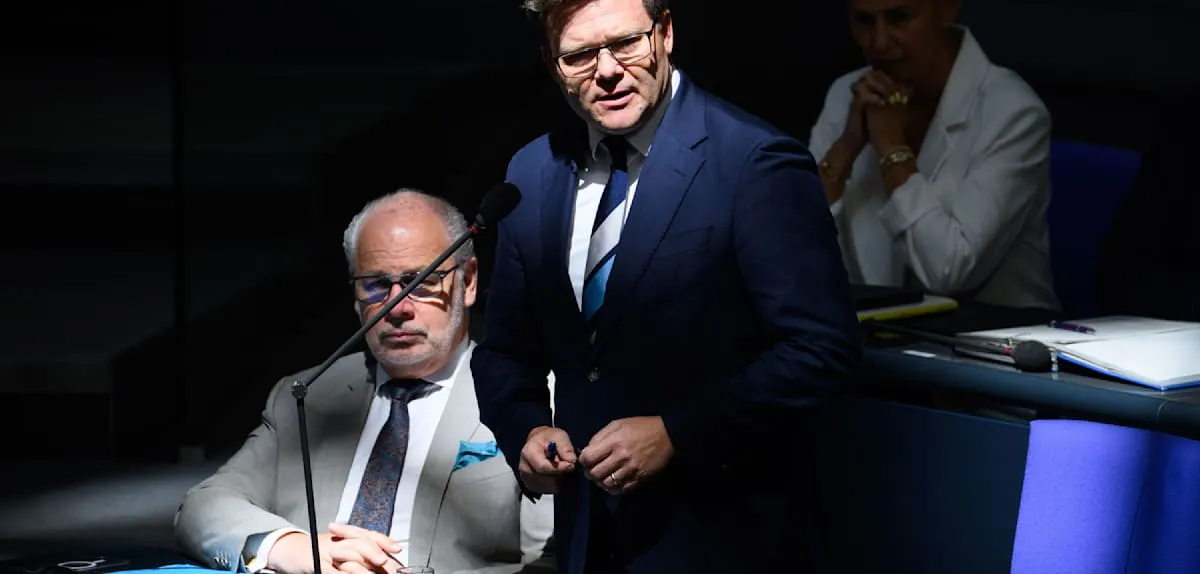
BERLIN — German Environment Minister, Carsten Schneider, issued a stern warning about potential serious conflicts stemming from water scarcity threatening the nation, particularly in urban areas. Schneider emphasized that the issue of water management in the Federal Republic of Germany is often underestimated, despite its implications possibly leading to a multidimensional crisis.
Schneider's warning comes amidst increasing pressure on water resources due to climate change and rapid urbanization. According to him, public awareness and comprehensive policies for water sustainability must become a top priority for both the government and society.
"We often take water availability for granted, a fatal error that could trigger serious conflicts in the future," Schneider stated, referring to the inability to appreciate water as a finite and vulnerable resource.
He added that urban areas and population agglomerations are the most vulnerable points to water scarcity. High population density, aging infrastructure, and high consumption patterns exert extreme pressure on clean water supplies.
This phenomenon is not merely a prediction. Concrete evidence has begun to emerge, one example being in Munich, one of Germany's largest cities. Recently, local authorities have implemented water consumption restrictions to address the existing deficit, a drastic measure that underscores the urgency of this problem.
Restrictions in Munich include prohibitions on watering gardens during certain hours and limitations on non-essential water usage. This step, while local, mirrors a larger challenge awaiting other cities across Germany.
Schneider stressed that without swift and planned mitigation actions, conflicts over water access and distribution could become a bitter reality. These conflicts would not be limited to the household sector but could also spill over into industry, agriculture, and even spark social tensions.
Water resource management in Germany, according to Schneider, must transform from a reactive to a proactive approach. Investments in water-saving technologies, infrastructure improvements, and public education are key pillars in the long-term strategy.
"We must learn from experience, such as the efforts discussed in 'Myth of the Green City Exposed: Symbolic Failures to Combat Urban Heat?', that partial solutions are no longer sufficient," Schneider affirmed, emphasizing the need for a holistic and integrated approach.
The integration of energy and water policies is also crucial. Similar to the debate on "Germany Shakes Up Energy: Gas Priority Shifts Renewable Dominance 2026," water policies must align with national and global sustainability goals.
Several hydrologists and climatologists support Minister Schneider's statements. They predict that the frequency and intensity of droughts will increase in some regions of Germany, while extreme floods also pose a real threat that can contaminate clean water sources.
Water crises not only affect availability but also water quality. Contamination from industrial and agricultural pollution can exacerbate the situation, making clean water increasingly difficult to access and expensive.
Therefore, the federal and state governments are urged to immediately formulate a stronger policy framework. This framework must include conservation strategies, water recycling, and the development of alternative water sources.
Community participation is key to the success of these mitigation efforts. Awareness campaigns, incentives for water-saving practices, and clear regulations will help shape more responsible water consumption behavior.
In conclusion, Minister Schneider's warning is not merely an alarm, but a call for swift and collective action. Germany's sustainable future heavily depends on how the country responds to these increasingly pressing water challenges in 2026 and beyond.