 Chris Robert

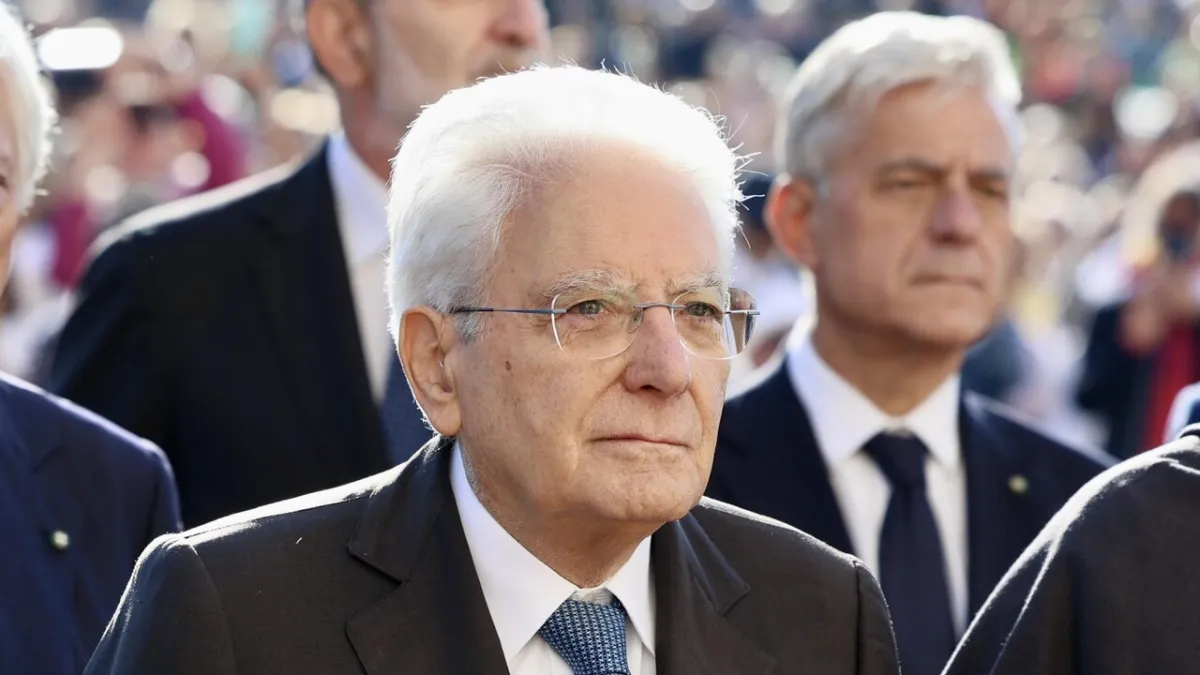
ROME – Italian President Sergio Mattarella recently issued a pardon decision that has sparked public debate, freeing a jeweler previously convicted for shooting and killing two robbers in a tragic act of self-defense. The decision, announced in 2026, involves Guido Gianni, a jewelry store owner in Catania, whose actions have fueled a profound discussion about the limits of self-defense and justice.
The incident occurred when Gianni, in an attempt to protect his assets and his life, confronted three armed robbers who stormed his store. In that critical situation, Gianni fired shots, resulting in the death of two assailants and injuring a third. The case immediately garnered national attention, eliciting both sympathy and complex legal questions.
Previous court proceedings had convicted Gianni, a verdict many considered too harsh given the circumstances he faced. The Italian public was divided, between those who saw him as a hero protecting his property and those who viewed him as a lawbreaker who should be punished.
Presidential Office at the Quirinale Palace confirmed that the pardon granted to Gianni was one of three clemency cases approved. The other two cases were not disclosed in detail to the public, but Gianni's case became the main focus due to its highly political and emotional nature.
Mattarella's decision is seen as a move that highlights the need for balance between law enforcement and the principle of justice, especially in the context of self-defense rights. It also reflects the President's role as the supreme authority in the Italian legal system capable of granting pardons in exceptional cases.
This pardon is not merely the release of an individual; it is a symbolic statement that can influence public perception of the judicial system. Many see it as a victory for an individual's right to self-defense, albeit within strict limits.
Debate regarding this decision is expected to continue across various platforms, from mass media to political discussions. Legal observers and justice activists have put forward various views, some supporting it as a form of humanity, others concerned about the precedent it might set.
Similar presidential decisions often spark intense debates about ethics, morality, and legal interpretation. In Italy, issues of justice and security have always been sensitive topics closely related to political dynamics. This adds a layer of complexity to an already emotional case.
The pardon for Guido Gianni will likely become an important case study in Italy's legal and social discourse, highlighting how the state balances citizen protection with law enforcement. Gianni's story, from robbery victim to convict, now concludes with a pardon from the country's highest authority.
President Mattarella's decision also demonstrates the independence of the presidential function within Italy's tripartite system, where the President has the authority to act in the interest of justice, regardless of prior legal outcomes. This is a tangible demonstration of executive power beyond ordinary judicial norms.
This pardon can be compared to other clemency actions taken by heads of state, always sparking discussions about the limits of power and responses to crime. This case will serve as an important reference for future discussions on legal reform and civil rights.
Editorial Insight: President Mattarella's decision to grant a pardon to Guido Gianni is a courageous and significant act. Regardless of the pros and cons, this move affirms that justice is not always black and white, and there is room for humanitarian consideration beyond legal provisions. It has the potential to strengthen the legitimacy of the President's role as a moral balancer within the legal system, while also fueling public demands for a reevaluation of self-defense laws. Its long-term impact on public trust in the justice system, as well as its potential to spark legislative discussions, warrants close observation.