 Gabriella
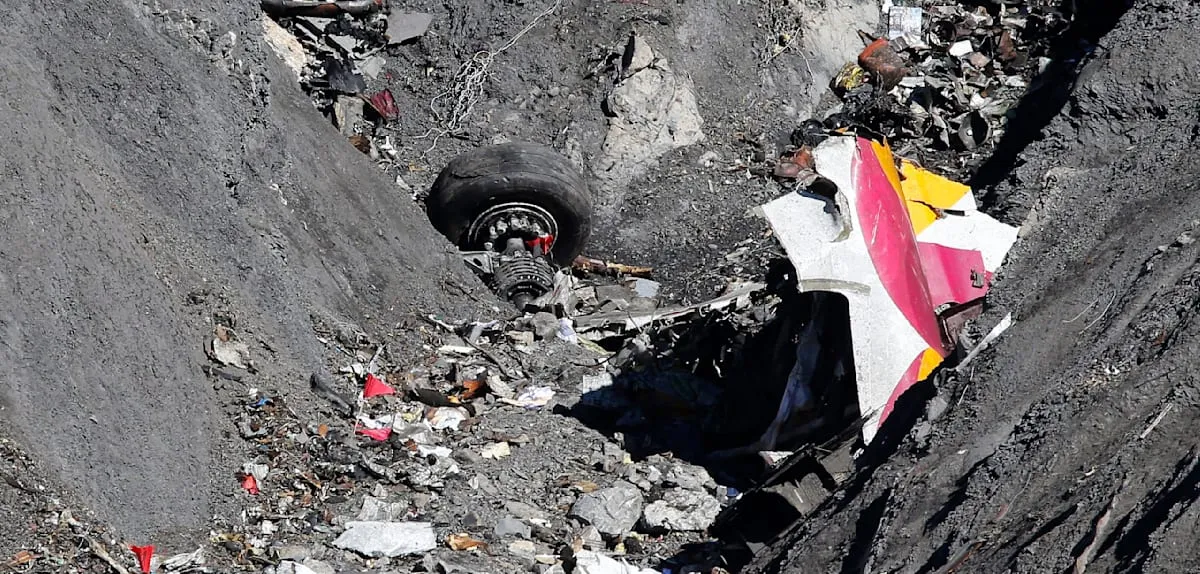
COLOGNE – A German court has rejected a lawsuit filed by the families of victims from the 2015 Germanwings tragedy, where a pilot deliberately crashed a plane carrying over one hundred people. The ruling states that the heirs are not entitled to receive additional pain and suffering compensation from the Federal Republic of Germany, concluding a multi-year legal battle following the horrific incident.
The tragic incident occurred on March 24, 2015, when Germanwings Airbus A320, flight number 9525, en route from Barcelona to Dusseldorf, crashed in the French Alps. Andreas Lubitz, the co-pilot, intentionally locked himself in the cockpit and brought down the aircraft, killing all 150 passengers and crew on board. This event shook the global aviation industry and sparked debates about pilot mental health and cockpit security protocols.
Since then, the victims' families have fought for justice and compensation for their immense loss. Although various forms of indemnification had been provided by the airline and insurance companies, some heirs felt that their emotional distress and suffering warranted further recognition and compensation, especially from the state, which they believed bore supervisory responsibility.
This latest lawsuit specifically targeted the Federal Republic of Germany, claiming negligence in oversight or a systemic failure that might have prevented the tragedy. The plaintiffs argued that the state should have had more stringent mechanisms to ensure pilots' mental health and fitness, particularly after it was revealed that Lubitz had a history of concealed psychological issues.
However, the court decided to reject the claim for additional compensation. In its verdict, the panel of judges affirmed that the primary responsibility for the incident lay with the co-pilot and the airline. The Federal Republic of Germany, in its capacity as a state, could not be held directly accountable for the criminal actions of an individual employed by a private entity.
This decision underscores the legal complexities in such cases, where the line between individual, corporate, and state responsibility becomes very thin. The court appears to have adhered to the principle that an individual's actions, even if fatal, do not automatically impose additional financial liability on the government if there is no direct and proven evidence of systemic negligence.
Previously, Germanwings, a subsidiary of Lufthansa, had paid a certain amount of compensation to the victims' families. This included material and some non-material damages, which were acknowledged by many as an initial response to the tragedy. Nevertheless, for some families, this financial support did not fully represent the profound losses they had endured.
A spokesperson for the victims' families, who wished to remain anonymous, expressed deep disappointment with the court's decision. We only wanted comprehensive justice, recognition of our suffering caused not only by a pilot, but also by a system that might have had loopholes, he stated. Their ongoing struggle reflects efforts to prevent similar occurrences in the future.
This ruling could influence legal precedents for similar cases in the future, particularly those involving claims against the state for individual actions within the private sphere. Although the Germanwings case is a unique tragedy, the implications of this decision will serve as a reference in discussions regarding state responsibility for the safety of its citizens in the context of regulated private services.
The German public and international aviation community have followed the outcome of this trial closely. Some argue that the ruling is legally sound, while others feel that the state should bear a greater moral responsibility towards its citizens, especially in cases of extreme negligence leading to loss of life.
Editorial Insight:
The court's decision to deny additional compensation to the heirs of the 2015 Germanwings victims reaffirms the limits of state responsibility within the German legal framework. While emotionally difficult for the victim's families to accept, the ruling emphasizes the need for proven systemic negligence to directly impose financial liability on the state. The challenge now lies in how states and regulators can strengthen oversight without fully assuming operational responsibility from private companies, while also ensuring adequate psychological and legal support for victims.