 Gabriella

Germany — A wave of fundamental debate is sweeping across Germany's political landscape, highlighting the essence of sovereignty and the source of state power. This intense discussion centers on a critical question: does ultimate power emanate from the people through electoral mechanisms, or do other entities such as non-governmental organizations (NGOs), mass media, and aggressive small groups wield equal or even greater influence?
This controversy is further exacerbated by discussions surrounding a political strategy known as Brandmauer, a concept literally meaning 'firewall' or 'dividing line'. Brandmauer, often interpreted as an attempt by major parties to isolate or refuse cooperation with certain political forces deemed extremist, is now proving to be a boomerang, threatening the very foundation of public trust in the democratic process.
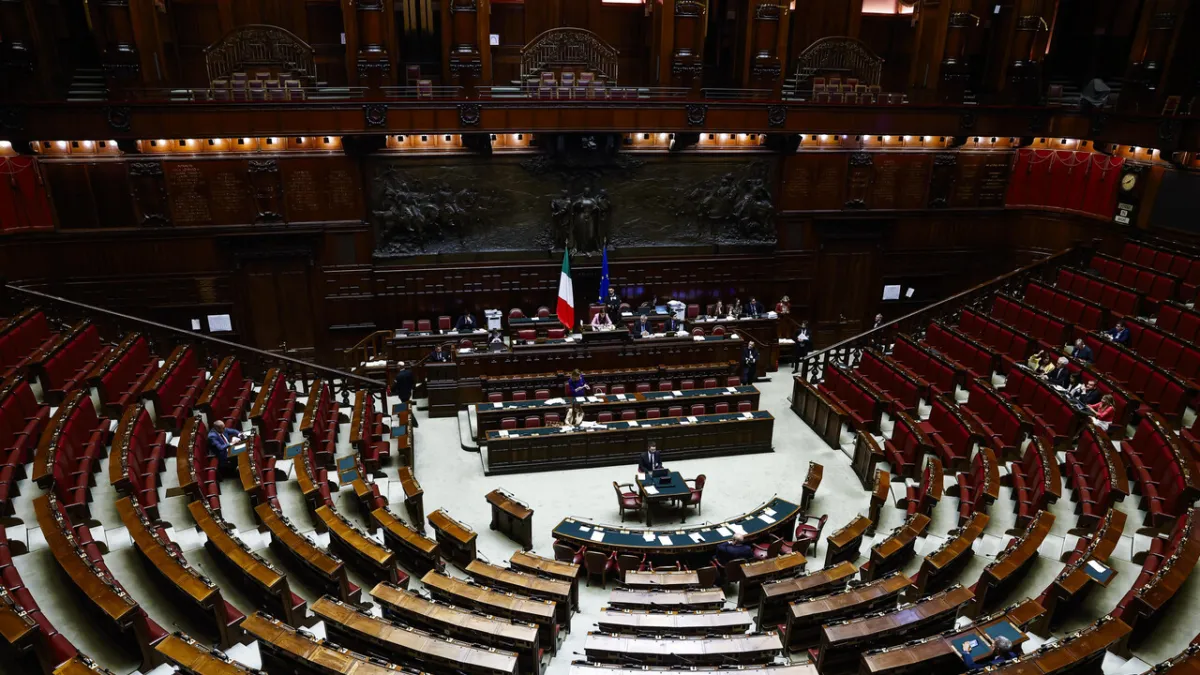
The governing coalition and opposition parties, particularly the Union bloc comprising the CDU and CSU, are now directly experiencing the impact of the polarization caused by this debate. Internally, the Union itself is increasingly divided, showing disagreement over the effectiveness and legitimacy of implementing Brandmauer in contemporary political dynamics.
Critics argue that strategies like Brandmauer, while aiming to maintain stability and democratic values, can indirectly limit voters' political choices and curtail the representation of voices. They fear that these isolation measures create the impression that power does not fully reside with the people, but rather is determined by agreements or 'walls' among political elites.
At the heart of this debate lies the German constitutional principle stating that "Alle Staatsgewalt geht vom Volke aus" – all state power emanates from the people. The conviction that every citizen's vote has the power to effect change is a crucial pillar of trust in the democratic system.
However, as public perception begins to waver, serious questions arise about the future of political participation. If voters feel their voices are no longer the primary determinant of policy direction, political apathy and an erosion of trust in democratic institutions could become unavoidable consequences.
Many point to the increasingly strong role of media and NGOs in shaping public opinion and the political agenda. While some view them as vital parts of civil society acting as watchdogs over power, others worry about the potential for certain narratives or agendas to dominate, which may not align with the aspirations of the majority of voters.
The split within the Union bloc reflects the complexity of the situation. Some senior politicians are advocating for a more inclusive and dialogic approach, even with parties previously shunned, in order to maintain social cohesion and prevent further fragmentation. They argue that isolation can actually reinforce the 'us versus them' narrative and deepen the political divide.
Conversely, other factions within the Union remain steadfast in their Brandmauer strategy, viewing it as an essential bulwark against the threat of extremism and the disintegration of liberal democratic values. They believe that compromising with certain parties would only legitimize views detrimental to the democratic order.
This situation places party leaders under immense pressure to navigate the balance between democratic principles, the need for stability, and the will of the people. German society watches closely how politicians will respond to this challenge, which has the potential to redefine the country's political landscape in the coming years.
Several political experts predict that this debate will continue and may become a central issue in the next general election. The ability of parties to convince voters that their vote still carries crucial weight will be key to restoring and strengthening public trust in the system.
Internal party struggles within the CDU itself have been evident, as reflected in reports concerning the potential loss of a top nomination by politicians like Kai Wegner, or calls for his resignation due to accusations of dishonesty, as discussed in Scandal of Lies Rocks Berlin and Berlin Mayor Cornered. Such incidents add a layer of complexity to the discussion about legitimacy and public trust in political leaders.
The implications of this debate extend beyond party lines. It is a reflection of a broader struggle in many democracies to determine how to balance freedom of expression, civic participation, and the protection of the system from damaging influences.
Ultimately, the main challenge is to ensure that "Alle Staatsgewalt geht vom Volke aus" remains not merely a constitutional phrase, but a reality felt and trusted by every German citizen. The future of German democracy, with all its complexities, depends on the wise resolution of this debate.