 Debby Wijaya

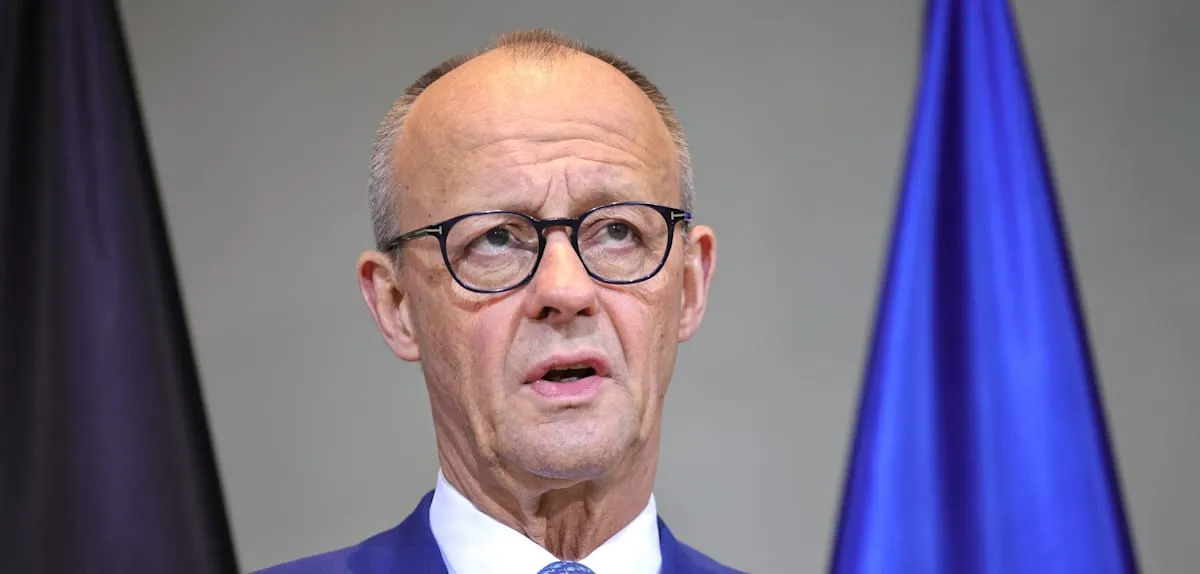
BERLIN – A widely circulated satirical report recently ignited a fierce debate in Germany, following provocative claims about 'chemtrails' policy allegedly to be escalated by senior political figure, Friedrich Merz. The public was presented with a fictional narrative depicting Merz, identified as the Chancellor within the satirical context, planning to triple the aerial spraying of certain substances over Germany. The satirical rationale stated that the substances currently being sprayed were deemed ineffective in influencing 'will-less federal citizens'.
This controversial narrative, while clearly fictional and presented in a satirical context, successfully highlighted the anxieties and conspiracy theories deeply rooted in German society. The 'chemtrails' issue itself refers to a conspiracy theory claiming aircraft intentionally spray harmful chemicals into the atmosphere for nefarious purposes, such as weather modification, mind control, or population reduction. These claims are widely rejected by the scientific community.
Friedrich Merz, known as a leading opposition figure in Germany, became the central character in this satire. His selection as 'Chancellor' in the fictional report can be interpreted as a political jab at specific discourses or policies, or simply the use of a public figure to lend weight to the satirical narrative. This reflects the dynamics of German politics in 2026, often marked by criticism and skeptical views from various segments of society.
Reactions to the satirical report were mixed. Many understood its humorous and critical context, yet a significant number misinterpreted it as factual news. This phenomenon led to a surge in online discussions, sparking debates between those skeptical of conspiracy theories and proponents who felt the satirical narrative validated their beliefs.
Communication experts and sociologists highlighted how political satire, while intended to critique or mock, can easily be misunderstood in today's complex information landscape. The line between fact, fiction, and parody often blurs, especially in the digital age where information spreads rapidly without adequate verification.
The claim about the 'ineffectiveness' of the sprayed substances in influencing 'will-less federal citizens' is at the core of this satirical jab. It reflects a critique of political apathy or the notion that society is easily manipulated, a sentiment often explored in satirical works to highlight deeper social and political issues.
Both the German government and scientific institutions consistently deny the existence of 'chemtrail' programs. They affirm that the white streaks in the sky often mistaken for 'chemtrails' are actually 'contrails' (condensation trails), which are tiny ice clouds formed from aircraft engine exhaust at certain altitudes—a natural phenomenon long understood scientifically.
This incident also reignited discussions about how conspiracy theories can persist and even proliferate, despite scientific evidence refuting them. Germany, like many other developed nations, has a long history of circulating conspiracy theories, which often find fertile ground among segments of the population distrustful of institutions or mainstream media.
The debate surrounding 'chemtrails' and other mysterious substances has been a recurring theme. One instance of public panic related to unknown substances occurred in Manchester, where the mystery of an unknown substance caused a rap concert to be evacuated, demonstrating public sensitivity to safety issues and chemicals in their environment.
Concerns about chemical interventions and their environmental impact are also not new. In the United States, there were reports that the US military disregarded court rulings and proceeded with dangerous chemical explosions in 2026, further providing context for why 'chemtrail' narratives can resonate among skeptics.
This case highlights the critical role of media in educating the public about the distinction between factual content and satire. The ability to critically evaluate information sources and understand contextual nuances becomes increasingly crucial to prevent the spread of misinformation that damages public trust in media and political institutions.
Ultimately, this satirical episode concerning Friedrich Merz and 'chemtrails' offers valuable lessons about the complexities of political communication in the modern era. It demonstrates that while satire is a powerful tool for social and political critique, its potential for misinterpretation always exists, especially when touching upon issues that have long been targets of conspiracy theories and public anxieties.
Editorial Insight: The incident centered on the satirical report about Friedrich Merz and 'chemtrails' underscores a profound paradox in journalism and public communication. Satire, as a reflection and critique of reality, possesses immense transformative power. However, amidst an information deluge and declining media literacy, the line between humor and factual truth can obscure public understanding. This event is not merely about fictional claims of substance dispersal, but about how narratives, even the most absurd, can expose gaps in public trust and anxieties, which in turn demands greater responsibility from all parties in presenting and consuming information. It is crucial for media to continue strengthening digital literacy education to equip the public with the ability to differentiate content.