 Dorry Archiles
WORLD—A 45-year-old engineer in peak physical condition has surprised the public by announcing his intention to undergo cryopreservation, a procedure to freeze his body at minus 196 degrees Celsius, immediately after his death. This drastic decision stems from his belief in a controversial scientific method, through which he hopes to be revived in the future when medical technology has advanced sufficiently.
The unconventional plan of this middle-aged man quickly garnered widespread attention, highlighting the limits of human hope in confronting mortality and the progress of science. Although there is no scientific guarantee of success, the engineer views cryopreservation not merely as an illusion, but as a potential breakthrough to transcend death.
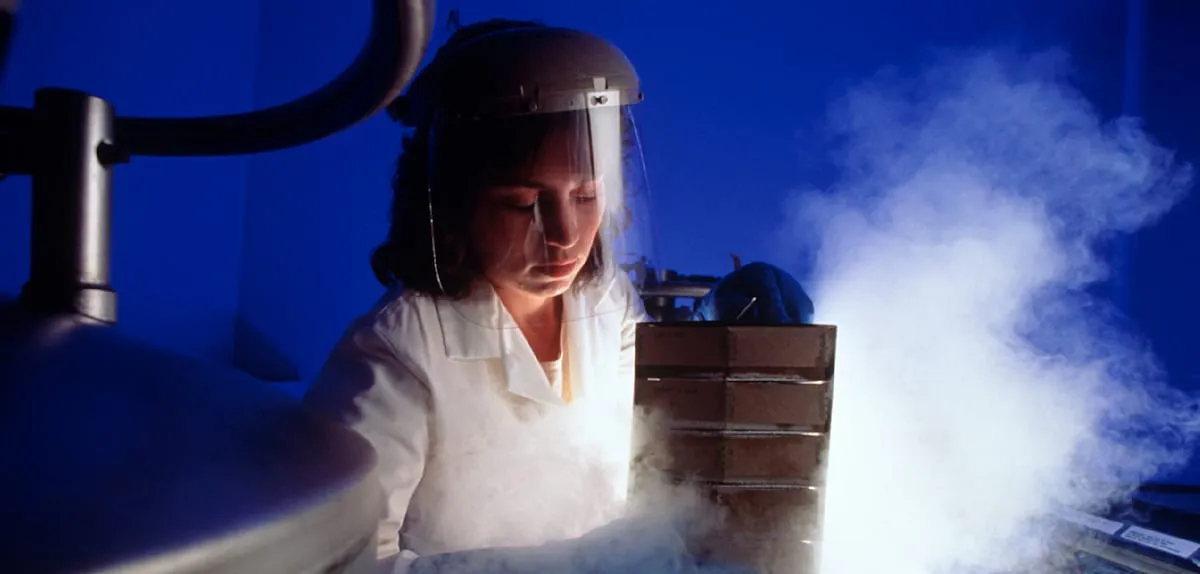
Cryopreservation is the process of freezing bodies or organs with the aim of preserving cells and tissues so they can function again at a later date. The procedure involves replacing body fluids with cryoprotectants, chemical compounds that prevent the formation of damaging ice crystals, then gradually cooling the body to liquid nitrogen temperatures.
At a temperature of minus 196 degrees Celsius, all biological activity in the body ceases completely. Proponents of this method argue that by preserving cellular structures, especially the brain, an individual's identity and memories can be retained. They are optimistic that future technological advancements will be able to repair cellular damage and revive frozen individuals.
The engineer's intention sparked fierce debate among scientists and ethicists. Some praise his courage in exploring the frontiers of science, while others remain skeptical, considering it a desperate act that incurs significant costs with no solid scientific basis.
A bioethics expert from the University of Hamburg, Professor Elena Richter, stated in an online interview in 2026, “The concept of cryopreservation offers a tantalizing promise, but the technical challenges of reviving an entire organism with intact cognitive function remain enormous. It's not just about cooling, but about preserving the essence of life.”
Cryopreservation facilities operate in several countries, offering these services to individuals willing to pay astronomical fees. Typically, the cost for full-body freezing can reach hundreds of thousands of US dollars, not including long-term maintenance costs. This amount serves as evidence of the substantial financial commitment required from its adherents.
Nevertheless, cryopreservation procedures continue to evolve with intensive research into new cryoprotectants and more sophisticated freezing techniques. Scientists hope that one day they can overcome major obstacles, such as tissue damage from ice crystals and cryoprotectant toxicity.
This engineer's case adds a new chapter to the long-standing debate about the definition of death, the possibility of life after biological demise, and the role of technology in altering human destiny. His bold decision reflects humanity's ambition to conquer natural limitations.
The debate between hope and illusion in the context of cryopreservation is far from over. While some see it as a leap of faith into the future, others adhere to current biological realities. However, one thing is certain: the 45-year-old engineer's decision has reopened a deep philosophical and scientific discussion about existence and immortality.
Such phenomena, although still in the realm of speculation, increasingly demonstrate how rapidly scientific and technological advancements are pushing humanity to question previously absolute boundaries. The engineer's story serves as a reminder that in this modern era of 2026, humanity's ambition to cheat death is becoming unstoppable.
How this story will end, whether it becomes a pioneer of immortality or merely a footnote in the history of science, only time and technological progress will tell. However, his step has underscored humanity's eternal fascination with life that transcends physical limits.