 Chris Robert
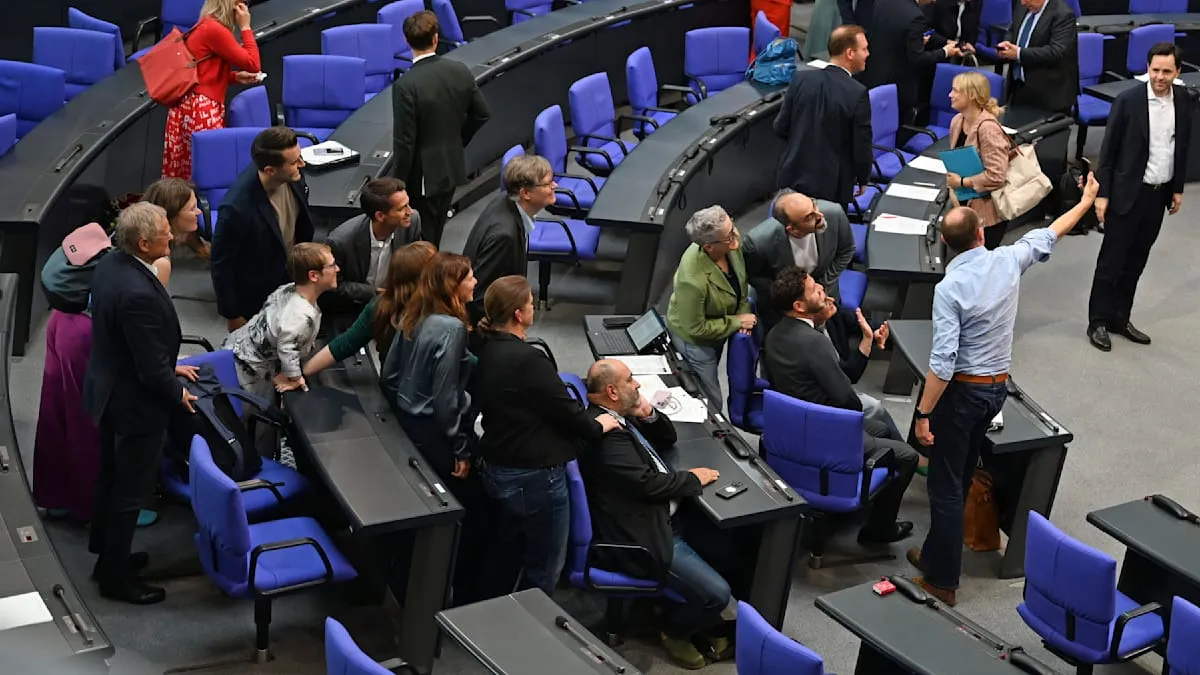
BERLIN — After enduring a tumultuous legislative half-year filled with intense debates and crucial decisions, members of the Bundestag, Germany’s federal parliament, officially began their summer recess in 2026. This decision marks a period of rest for the legislators, following a series of demanding sessions addressing various domestic and international issues.
This annual break provides politicians with an opportunity to return to their constituencies, engage directly with voters, and recharge before tackling an equally challenging legislative agenda in the autumn session.
The first half of 2026 witnessed the deliberation of several vital bills. Issues such as green energy reforms, strengthening digital infrastructure, and strategies to mitigate the impact of inflation on household economies were central focuses. Germany’s economy, currently teetering on the brink, also received serious attention. Recent reports indicate that twenty percent of German companies are delaying investments due to rising production costs, a fact demanding responsive policies from the government and parliament. For more information on this economic situation, readers can refer to the article “Germany’s Economy on the Brink: 20% of Companies Halt Investment Due to High Costs”.
Political tensions also characterized the Bundestag’s legislative journey. Debates regarding Germany’s position amid European geopolitical turmoil and internal issues related to immigration and integration often sparked controversy. The public also observed how German politicians faced increasingly skeptical citizens regarding political promises, as discussed in “German Politicians Confront Skeptical Citizens: Trust Gap Heats Up 2026”.
A Bundestag spokesperson stated that this period of recess is essential for maintaining the effectiveness of legislative work. “Members of parliament have devoted significant time and energy to ensure every decision made represents the interests of the German people,” she remarked in a brief press conference before the break commenced.
During the recess, committee and party faction activities will continue, albeit at a reduced intensity. Parliamentary staff remain on duty to prepare important agendas to be discussed once the members reconvene.
One issue expected to heat up after the break is the federal budget for the next fiscal year. Discussions on allocating funds for defense, education, and social welfare programs are predicted to become lengthy debates between the coalition and opposition.
Furthermore, the challenge of climate change remains a priority. Despite numerous initiated policies, reports of boiling German river temperatures indicate that mitigation efforts need to be accelerated. “Germany’s River Temperatures Boiling, Ecosystem on Brink of Collapse: Climate Disaster Alarm 2026” underscores the urgency of this issue.
The parliament will also continue to face pressure from various interest groups and civil society demanding faster responses to existing problems. The credibility of institutions in the eyes of the constitution and citizens will continually be tested, as alluded to in the article “The State Promises, Citizens Await: Credibility in the Eyes of the Constitution 2026”.
The Bundestag’s return from the summer break is typically marked by the reopening of plenary sessions discussing strategic issues, often involving speeches from the Chancellor and faction leaders. Great hope is placed on this break yielding fresh perspectives and stronger consensus in addressing future national and global challenges.
This period of rest also serves as an opportunity for political parties to evaluate their strategies, especially ahead of local or regional elections that may be held in some parts of Germany. Internal political dynamics, such as the partial ban on the AfD proposed by CSU Thuringia, will also remain under scrutiny, as detailed in “Germany Shake-Up 2026: CSU Thuringia Pushes for Partial AfD Ban, Höcke’s Voting Rights Threatened!”
Although the Reichstag building will appear emptier, Germany’s political machine does not completely halt. Preparations for the next wave of legislation have already begun, signaling that this break is merely a brief pause before the battle of ideas and policies resumes. The public awaits the results of their hard work after the break, hoping concrete solutions to the various problems facing the country can soon materialize.