 Chandra Wijayanto

BERLIN — The lead candidate for the Christian Democratic Union (CDU), Kai Evers, has surprisingly declared his intention to overturn the results of a popular referendum concerning property development on or around Tempelhofer Feld. This statement comes after the Berlin Election 2026, sparking an intense debate about public participation and the future of the German capital's iconic green space.
Evers, whose party's position has strengthened in the Berlin State Parliament, asserted that the 2014 referendum results are no longer relevant to the housing crisis afflicting Berlin in 2026. According to him, the urgent need for new housing must take precedence over public wishes expressed more than a decade ago.
The 2014 referendum explicitly rejected development plans for Tempelhofer Feld, a former airport that now serves as Berlin's largest urban park and a vital recreational area for its citizens. The outcome mandated the preservation of Tempelhofer Feld as an open green space without commercial or residential development.
Evers' stance contradicts the principles of direct democracy that underpin referendums. Critics describe this move as a bold political maneuver potentially eroding public trust in democratic decision-making processes. They argue that disregarding the will of the people sets a dangerous precedent.
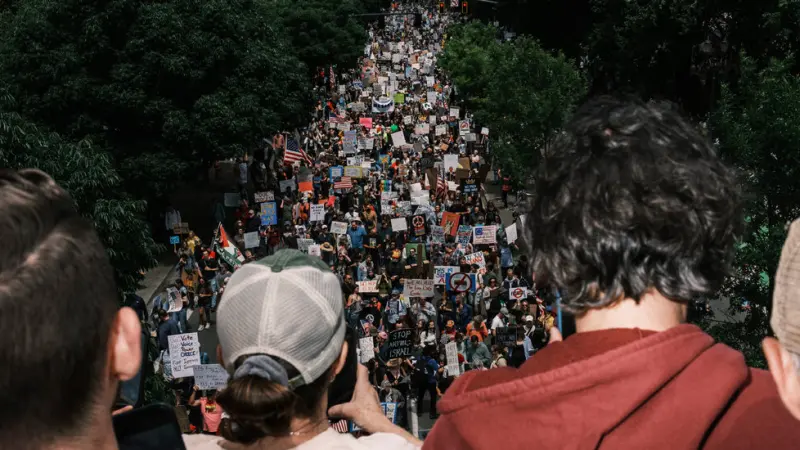
Environmental activist groups and citizen organizations, long champions of Tempelhofer Feld's preservation, immediately expressed strong opposition. They plan to launch a large-scale campaign to counter the CDU's proposal and safeguard the green area's integrity from development.
Other stakeholders, including property developers and the construction sector, have welcomed Evers' discourse. They view Tempelhofer Feld as a strategic location to address housing shortages and stimulate urban economic growth. This support further intensifies the polarization of public opinion.
In recent years, Berlin has indeed grappled with an inadequate housing supply, driving up rental prices and making it difficult for many residents to find suitable accommodation. This situation has frequently been a hot topic in every Berlin Election.
The debate surrounding Tempelhofer Feld is not solely about physical development but also about the city's identity and how Berlin balances urban growth with environmental preservation. The final decision on this area will be a significant benchmark for the new administration.
Candidates from other parties have not yet issued official statements regarding their position on Evers' proposal. However, it is certain that this issue will be a major stumbling block in forming a governing coalition after the Berlin Election 2026, given its political sensitivity.
The Green Party and Die Linke, traditionally supportive of environmental preservation and citizen rights, are expected to lead the opposition to Evers' plan. The Berlin city government's policies have recently come under scrutiny regarding efficiency and responsiveness to its citizens' needs.
Political observers predict that if the CDU genuinely proceeds with this plan, they will face significant legal challenges from various community groups. A courtroom battle may be unavoidable, adding complexity to the German local political arena.