 Angela Stefani
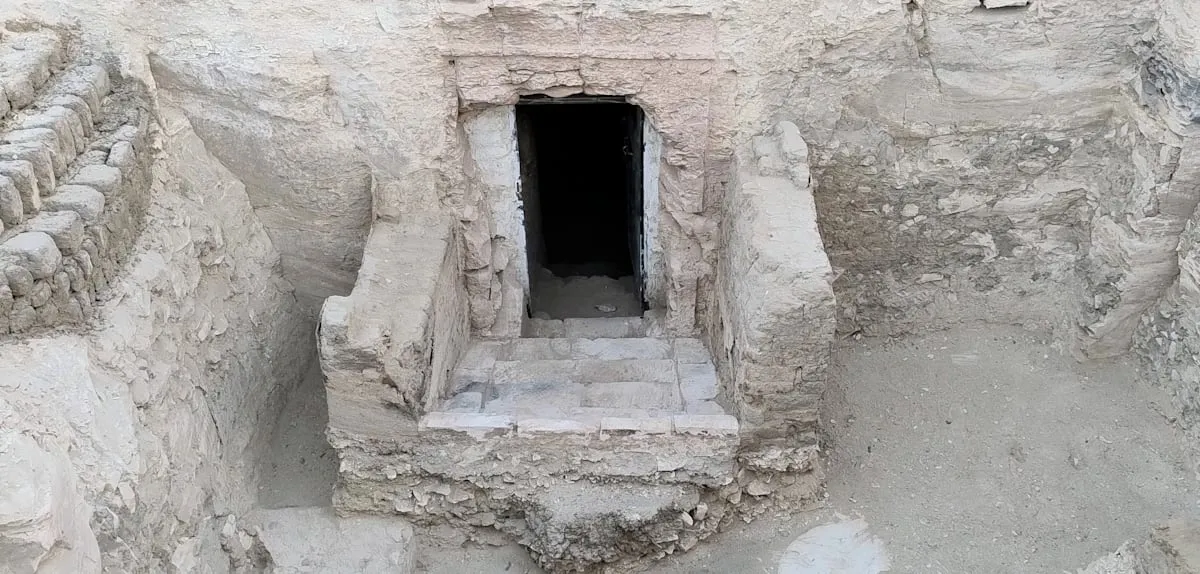
LUXOR — Dutch archaeologists recently marked a significant discovery near Egypt’s Valley of the Kings, unearthing the tomb of a nobleman named Paser, approximately 3000 years old. This spectacular find offers deep insights into Paser's life and beliefs, a prominent figure from ancient Egypt. However, the most crucial part of the tomb, believed to house vital artifacts and information, remains untouched by researchers.
The expedition team, led by Leiden University in collaboration with Egyptian authorities, excavated an area adjacent to the famous burial grounds of pharaohs and nobles. This excavation has spanned several seasons, yet the discovery of Paser's tomb stands as the culmination of meticulous investigative efforts, reaffirming Egypt's status as a treasure trove of ancient civilization.
The tomb is estimated to date back to the 19th Dynasty, during the New Kingdom era, a period renowned for its cultural richness and political power. Paser likely held an important position at court, overseeing various aspects of government or religion. The presence of his tomb in a strategic location near the Valley of the Kings indicates his high social status.
Thus far, the team has found several artifacts accompanying Paser's remains. Among them are ceramic pots, simple jewelry, and remnants of linen fabric that were part of the burial rituals. Each small object serves as an invaluable window into the daily life and rituals observed by ancient Egyptian society.
Initial analysis of the hieroglyphs and reliefs on the tomb walls reveals fascinating details about Paser's beliefs regarding the afterlife. The carved symbols depict his soul's journey to the underworld, complete with prayers and offerings to deities such as Osiris and Anubis, rulers of the netherworld.
The most intriguing section is a main chamber or sarcophagus that has not yet been opened. Archaeologists believe this holds the primary key to a more comprehensive understanding of Paser's identity, possibly including papyrus scrolls, gold jewelry, or even an intact mummy. Anticipation surrounds the research team awaiting this historical moment.
The process of opening the tomb's core requires extreme caution and meticulous planning. Factors like humidity, structural stability, and potential ancient traps are primary concerns. The team plans to use non-invasive scanning technology first to map the chamber's contents without compromising the site's integrity.
This discovery is not only crucial for Egyptian history but also for the global understanding of ancient civilizations. Every layer of soil excavated and every artifact unearthed enriches the narrative of human history, revealing complex interconnections between power, spirituality, and social life.
Research on Paser's tomb will continue throughout 2026 and is expected to take many years for in-depth analysis. Scientific publications and exhibitions may follow, allowing the world to witness the treasures preserved beneath the Egyptian desert.
The mystery surrounding Paser's tomb is a poignant reminder of how many secrets of ancient civilizations still await revelation. With each discovery, a new chapter of ancient Egyptian history unfolds, offering fresh perspectives on a timeless legacy.