 Debby Wijaya
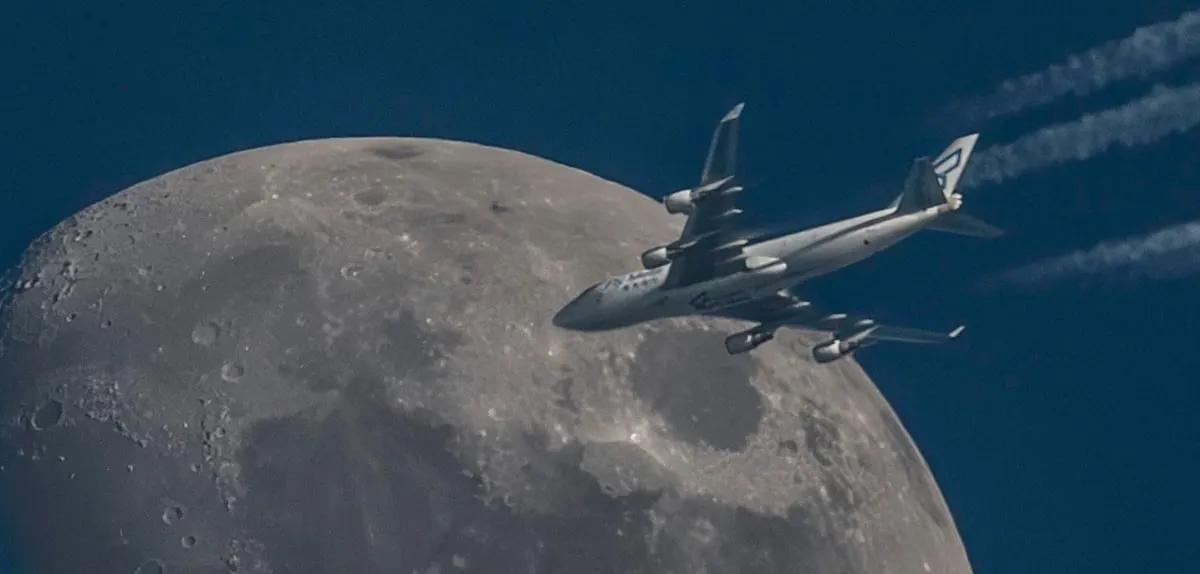
Scientists and space researchers from the National Aeronautics and Space Administration (NASA) recently warned the world about the devastating consequences if the Moon were to suddenly disappear from its orbit in 2026. The loss of Earth's natural satellite would trigger a series of dramatic changes on the planet, threatening ecosystems and life as we know it.
For billions of years, the Moon has been Earth's constant companion, playing a fundamental role in maintaining the cosmic balance around us. Its continuous interaction with Earth has shaped geology, climate, and even the evolution of life.
In various recent simulations and studies, NASA explicitly explained that the idea of Earth without the Moon is not merely science fiction speculation, but a scenario with crucial implications that humanity needs to understand deeply.
The most immediate impact would be a drastic change in the night sky. Without the Moon's reflected light, nights would become significantly darker, affecting the navigation of many nocturnal animals and altering human perception of the cosmos.
However, more dire effects lie hidden beneath the surface. The Moon's gravitational pull is the primary determinant of ocean tides. Its sudden disappearance would cause extreme tides to become minimal, or even vanish entirely, disrupting coastal ecosystems and marine life.
The Moon's crucial role also lies in stabilizing Earth's axial tilt. Without the Moon's gravitational influence, Earth's axis would wobble erratically. These fluctuations could potentially lead to extreme and unpredictable global climate changes within short periods.
Such unstable climate shifts could usher in new glacial eras in some regions, while other areas experience prolonged heatwaves. Seasons would become unpredictable, threatening food security and biodiversity.
Life on Earth has adapted to the Moon's rhythm for millions of years. Many species, particularly in the oceans, rely on tidal cycles for reproduction, foraging, and migration. Disruption to these cycles could trigger mass extinctions.
Even Earth's rotational speed would be affected. Without the Moon's gradual gravitational braking effect, Earth's days would shorten significantly. This change in day length would have further impacts on global wind patterns and ocean currents.
NASA emphasizes the importance of such hypothetical studies in enhancing our understanding of the complex Earth-Moon system. Although the likelihood of the Moon disappearing is extremely low, this research provides invaluable insights into the fragility of the planet's ecological balance.
Astronomers and climate scientists worldwide in 2026 continue to conduct modeling to anticipate other potential extreme scenarios that could threaten Earth's stability, including impacts from asteroids or unexpected solar anomalies.
Overall, this scenario of the Moon's disappearance reminds us of the intricate web of life and cosmic phenomena. The Moon is not merely a bright spot in the night sky, but a crucial pillar supporting life on Earth.