 Gabriella
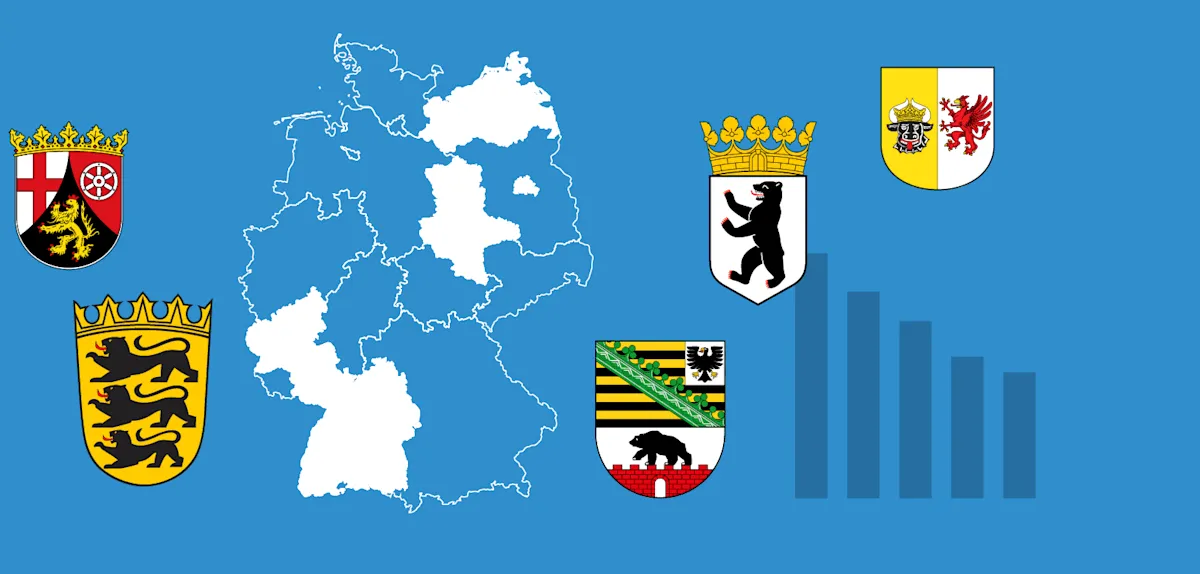
Berlin — Five German federal states are preparing for crucial general elections in 2026. Based on recent poll results, the political landscape indicates difficult government formations, potentially opening the door for minority governments or even breakthroughs in traditional coalition patterns.
This situation has sparked intense debate among observers and politicians regarding political stability and the country's ability to pursue important agendas. The latest polls consistently show significant fragmentation of voter support, making it difficult for parties to achieve an absolute majority.
A minority government, a rare phenomenon in post-war German politics, refers to a cabinet situation not supported by a majority of seats in parliament. This configuration often poses major challenges in legislation and decision-making, given the need for cross-party support for every policy.
Not only minority governments, but the idea of a “Tabubruch” or political taboo-breaking is also emerging. This refers to the possibility of forming coalitions previously considered impossible, for instance, between very different political spectrums, in order to avoid deadlock or re-elections.
Available polls for the five federal states, although not specifically named in the source data, indicate dramatic electoral shifts. Traditional parties are experiencing a decline in support, while newer or more extreme parties are gaining traction, creating an unstable dynamic.
Professor Klaus Richter, a political science expert from Heidelberg University, commented last week, “2026 will be a true test for the flexibility of the German political system. Current trends suggest that we might witness daring political experiments, be it minority governments or unprecedented multi-party coalitions.”
Historically, Germany has a strong preference for majority coalition governments for stability. However, some state or city governments in the past have experienced periods of minority government, often characterized by protracted negotiations and significant political concessions.
The implications of these complex government formations are extensive. Domestically, strategic policies, such as energy transition, immigration reform, and infrastructure investments, could be delayed or hampered. This would undoubtedly affect Germany's economic growth and social welfare.
On the international stage, domestic political uncertainty could affect Germany's role as a driving force in the European Union and as a global strategic partner. German political stability is fundamental for the continuation of EU projects and its international commitments, including defense issues. Germany, as Europe's largest economy, has a significant influence on the direction of regional and global policy.
“In the context of global turmoil, clear political signals from Berlin are vital,” added Professor Richter. This situation could challenge German foreign policy, especially in European defense cooperation and security issues, such as strategic missile acquisition. Germany's acquisition of US Tomahawk missiles, for example, is a step requiring solid political backing.
The German public can also monitor developments through online “Koalitionsrechner” or coalition calculators. These interactive tools allow citizens to simulate various coalition scenarios based on poll results, providing a visual overview of potential party combinations that might form.
Heading into the election year, political parties face the daunting task of formulating strategies that not only attract voters but are also realistic for forming a functional government. Pre-election and post-election negotiations are expected to be highly intense and challenging.
Ultimately, the outcome of the 2026 elections in these five federal states will be a crucial indicator for the health of German parliamentary democracy and its ability to adapt to increasingly complex political realities. This is not merely a change of power, but a significant gamble for the future of German political stability.