 Chris Robert
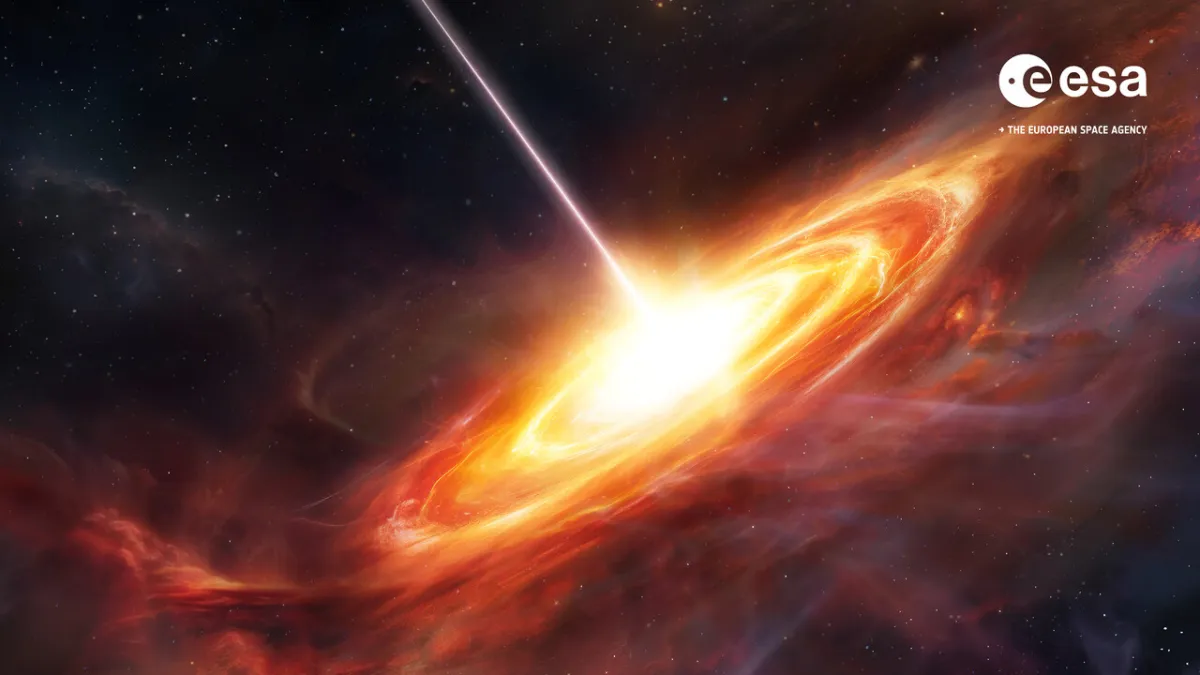
Earth — The international scientific community was recently astonished by the discovery of the oldest quasars ever observed, an astrophysical phenomenon formed merely 670 million years after the Big Bang. This profound observation, made possible by advanced telescope technology, offers revolutionary insights into the earliest periods of the universe's evolution and poses significant challenges to our understanding of supermassive black hole formation.
This monumental discovery highlights the existence of highly active supermassive black holes in the very young universe, a period known as the Cosmic Dawn. The speed of formation and growth of such massive objects like these quasars confounds cosmologists, given the relatively short time since the universe began to take shape.
Quasars, the intensely luminous nuclei of active galaxies, emit tremendous energy as matter falls into the supermassive black hole at their center. The light from these ancient quasars has traveled billions of light-years to reach our telescopes, making them 'time capsules' revealing the universe's conditions in the distant past.
Scientists identified these quasars using a combination of data from various leading telescopes, including the James Webb Space Telescope, fully operational in 2026. JWST's infrared capabilities were crucial in penetrating cosmic dust and observing such extremely distant and faint objects.
This discovery has immense implications for the standard cosmological model that describes the universe's development. Existing theories struggle to explain how black holes with masses billions of times that of the Sun could form so rapidly in the cosmos's early history.
One emerging hypothesis suggests that early black hole seeds might have been far more massive than previously thought, or that the growth mechanisms of black holes in the early universe were significantly more efficient. This could involve the direct collapse of giant gas clouds into black holes without passing through a stellar stage.
A leading astrophysics researcher stated, "The discovery of these oldest quasars is like opening a window into a past we have never seen before. It forces us to rethink how the universe began to form complex structures."
The era when these quasars formed was a critical period called the Epoch of Reionization. During this time, radiation from the first stars and quasars began to ionize the neutral hydrogen gas that filled the universe, gradually ending the Cosmic Dark Ages.
Understanding the properties of these quasars provides vital clues about how the reionization process occurred and how the first galaxies began to shine. The data collected will form the foundation for further research into the interplay between supermassive black holes and the evolution of their host galaxies.
A key challenge in observing objects in the early universe is the faintness of the received signals and the extreme redshift due to the universe's expansion. Continuously evolving telescope technology allows astronomers to overcome these barriers with unprecedented precision.
Moving forward, scientists plan to conduct further observations with high-resolution spectroscopy to analyze the chemical composition and gas dynamics around these ancient quasars. Such information is essential for testing various models of black hole formation and galaxy evolution.
This discovery also pushes the boundaries of our understanding of the physical and temporal limits of the universe. It sparks profound questions about the cosmos's origin, evolution, and destiny, including dark matter and dark energy.
With every new discovery from the early universe, we move closer to a complete understanding of the Cosmic Dawn. These quasars are beacons in the ocean of time, guiding scientists through the cosmos's greatest mysteries.
The impact of such discoveries is not limited to the scientific community. It inspires the wider public and future generations of scientists to continue questioning and exploring the limits of our knowledge about this astonishing universe.
Overall, the discovery of the oldest quasars represents a historic milestone in astrophysics and cosmology. It is not merely an observation but an invitation to redefine the boundaries of our understanding of the universe's beginnings.
International collaboration will be key for subsequent research, with various global observatories joining forces to solve the puzzle of supermassive black hole growth in the very young universe.
Projections indicate that next-generation telescopes, such as the European Extremely Large Telescope (ELT), will provide even more revolutionary observational capabilities, allowing us to see further into the past with unmatched detail.
The theoretical implications of this discovery will spark intense debate among physicists and cosmologists, driving the development of new, more comprehensive models to explain these extreme phenomena.
Ultimately, the story of these ancient quasars is a narrative of human perseverance in uncovering the universe's secrets. Each point of light from the past is a new chapter in the infinite book of the cosmos.
This discovery solidifies 2026 as a significant year for space exploration, reinforcing the role of advanced technology in expanding our view of the vast and ancient universe. It is proof that the universe's greatest mysteries still await unraveling.