 Dorry Archiles
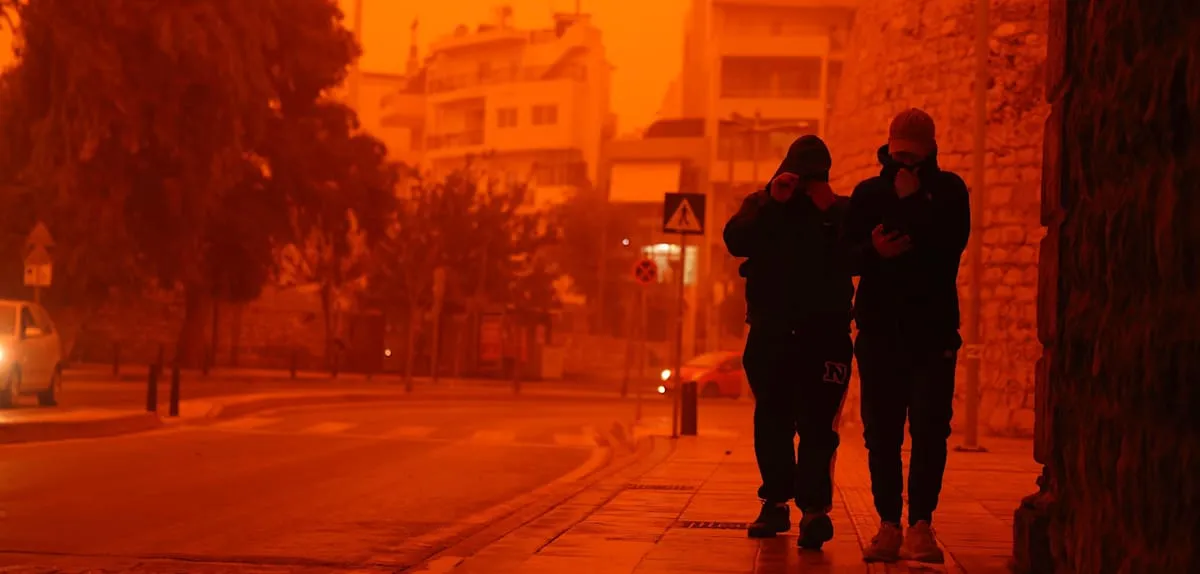
EUROPE — In 2026, the European continent faces a significant increase in storm intensity, now carrying a much larger volume of Saharan dust. This natural phenomenon, marked by an intense yellow or orange sky, is not merely a unique spectacle but a serious indicator of increasing air pollution and potential public health risks across the region.
Climate and atmospheric researchers note that visual observations of this intense sky coloring are clear evidence of surging desert dust concentrations in Europe's atmosphere. These events are occurring with unprecedented frequency and scale, triggering serious concerns among health and environmental authorities.
This increase in storm intensity and Saharan dust movement is inseparable from the increasingly worrying dynamics of global climate change. Shifts in weather patterns, rising sea surface temperatures, and changes in atmospheric pressure contribute to stronger storm paths capable of transporting material from the Sahara Desert across the Mediterranean Sea to mainland Europe. This phenomenon echoes the urgency of addressing the Krisis Iklim 2026: Dunia Memasuki Fase Genting Penentu Arah (Climate Crisis 2026: The World Enters a Critical Turning Point Phase) which requires coordinated global action.
The fine particles of Saharan dust, although beautiful from a distance, contain minerals, bacteria, and other pollutants that can have adverse health effects. When inhaled, these particles can cause respiratory irritation, exacerbate asthma, bronchitis, and other chronic lung diseases. Children, the elderly, and individuals with a history of respiratory conditions are the most vulnerable groups.
Beyond health impacts, Saharan dust also causes significant disruption to daily life and infrastructure. The layer of dust covering vehicles, buildings, and other surfaces requires extra cleaning efforts. Reduced visibility due to airborne dust particles can also disrupt air and ground transportation, and diminish the quality of life in affected areas.
“These high dust concentrations are no longer occasional anomalies but an increasingly worrying trend,” stated Dr. Elara Vance, a senior climatologist from Heidelberg University, during a press conference in Berlin. “The long-term impact on public health and ecosystems requires strict monitoring and adaptive policy responses.”
Meteorological data analysis for 2026 indicates that the volume of Saharan dust reaching Europe has surpassed the average of previous decades. Dust plumes are not only more frequent but are also spreading to areas previously rarely affected, from the Iberian Peninsula to Scandinavia.
Responding to this situation, several European countries have issued public health warnings, urging citizens to reduce outdoor activities, especially for vulnerable groups, and to use protective masks. Air quality monitoring systems are continually optimized to provide real-time information to the public.
Governments of European Union member states are reportedly coordinating to develop long-term mitigation strategies, including investments in climate research, more sophisticated early warning systems, and public awareness campaigns. These efforts align with the need to adapt to extreme weather changes that frequently occur, such as when Italia Diguncang: Panas Ekstrem 2026 Berakhir, Suhu Anjlok Drastis (Italy Shaken: Extreme Heat 2026 Ends, Temperatures Plummet Drastically).
Scientists continue to delve into the chemical composition of Saharan dust and its interaction with the atmosphere to understand its dispersion mechanisms more accurately. This research is expected to help predict the path and intensity of future dust waves, as well as develop more effective solutions to protect health and the environment.
The increasingly intense Saharan dust phenomenon serves as a stark reminder that the impacts of climate change are no longer a distant threat but a reality facing Europe and the world in 2026. Global collaboration in reducing greenhouse gas emissions and robust adaptation strategies are key to addressing this challenge.
As a community, it is crucial to stay informed about the latest information from local authorities regarding air quality and self-protection measures. Awareness and proactive actions can help minimize the risks posed by the growing threat of desert dust frequently enveloping Europe's skies.