 Angela Stefani
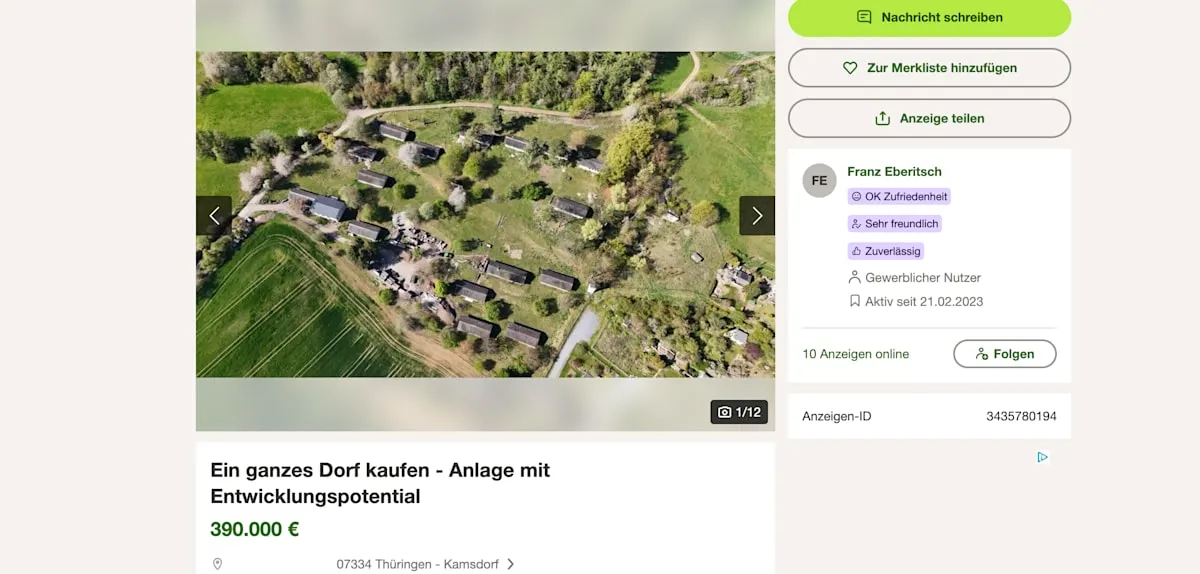
ALWINE, Germany — An entire village in the Thuringian region of eastern Germany sent shockwaves through the property market with an astonishing offer in 2026. The village of Alwine, located in the state of Brandenburg, near the Thuringian border, was put up for sale for 390,000 Euro, a sum comparable to the price of a modern urban apartment. However, behind the allure of this incredibly low price lies a stark reality concerning the survival of rural communities.
This sale is more than just a typical property transaction. It uncovers complex layers of depopulation and an aging society that afflict many areas of former East Germany post-reunification. For some, it represents a unique investment opportunity; for others, it is a symbol of decline.
The village sale package includes nine residential buildings, several outbuildings, and agricultural land, spanning an area of approximately 16,000 square meters. Visually, it is a blank canvas awaiting the touch of revitalization.
However, Alwine's appeal diminishes when its true condition is revealed. Currently, the village is inhabited by only about 15 to 20 residents, the majority of whom are elderly. The younger generation has long migrated to larger cities for economic opportunities and a more dynamic lifestyle, leaving behind vacant homes and aging infrastructure.
"This phenomenon reflects undeniable macro trends," stated Dr. Anja Schmidt, a demographer from Leipzig University. "Small villages like Alwine struggle to maintain their identity and sustainability amidst massive urbanization. This low price is actually an indicator of the very high social and economic costs required to bring life back."
The absence of public facilities poses a significant challenge. Alwine has no grocery stores, restaurants, or other essential services. Residents must travel quite a distance to the nearest town for daily necessities, a burden that is increasingly difficult for the elderly population.
Historically, Alwine was closely connected to the thriving briquette industry in Brandenburg. The village was once owned by a briquette company that provided employment for most of its residents. After Germany's reunification in 1990, the industry collapsed, and the company closed. The village then transferred ownership to individuals who are now selling it.
Potential buyers are not only required to have financial capital but also vision and a long-term commitment. Revitalizing Alwine means investing in the community, restoring buildings, and attracting new residents willing to embrace rural life with all its challenges.
The German federal and state governments have launched various initiatives to support rural areas, ranging from subsidies for renovations to integration programs for newcomers. However, the success of these efforts varies, and many villages still face an uncertain future.
The Alwine case sparks widespread discussion about the future of rural areas in Germany and Europe. Are there innovative solutions that can halt the spiral of depopulation, or will villages like this continue to be relics of the past awaiting decline?
The offer for Alwine attracts not only investors but also visionaries, environmental activists, and those who believe in the potential of sustainable rural living. The transformation of this village could serve as an inspiring case study for addressing similar challenges worldwide.
Considering the current conditions, the sale of Alwine in 2026 is not just about a property, but about an opportunity to rewrite the narrative of a community. Whoever dares to take on Alwine will face a monumental task, but potentially leave an invaluable legacy for future generations.