 Demian Sahputra
NEW YORK – The US House Judiciary Committee, now controlled by the Republican faction and led by close Donald Trump ally, Congressman Jim Jordan, recently held a field hearing in New York City. The hearing specifically examined the alleged increase in violent crime in Manhattan, which, according to the Committee, resulted from District Attorney Alvin Bragg's policies. This move sparked public debate, especially given the calls to investigate alleged ethical violations involving Supreme Court Justice Clarence Thomas.
The Judiciary Committee's official statement indicated that the hearing's purpose was to examine how Manhattan District Attorney Alvin Bragg's policies have 'led to an increase in violent crime and a dangerous community for New York City residents'. The event, titled 'Victims of Violent Crime in Manhattan', presented various testimonies and data designed to support the Committee's arguments.
The Committee's focus on local law enforcement in Manhattan has drawn scrutiny, particularly from the Democratic camp. Many questioned the Committee's priorities, choosing to intervene in state judicial matters while sidelining pressing national issues, including alleged ethical breaches within the Supreme Court.
Criticism of District Attorney Bragg comes amid increasing attention to his prosecution strategies. Critics argue that his progressive policies, such as reduced sentences for certain offenses, indirectly contribute to alarming crime trends. This hearing represents a Republican effort to highlight the issue on a national stage.
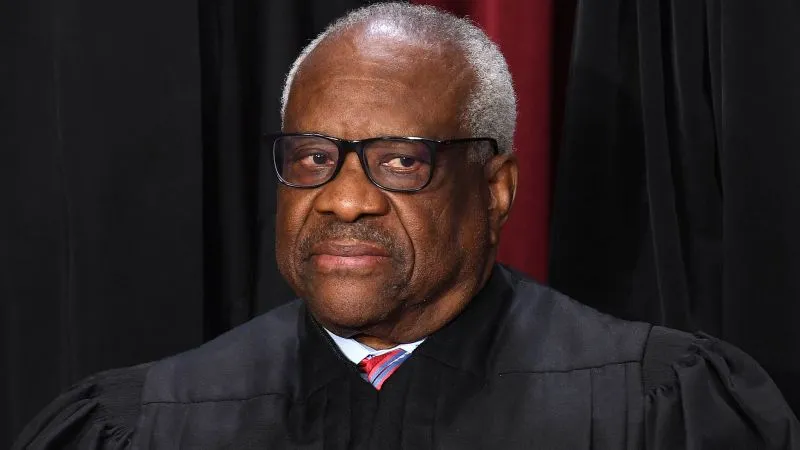
However, amidst the focus on Manhattan, the shadow of ethical issues surrounding Justice Clarence Thomas continues to loom. Various investigative reports have uncovered alleged acceptance of gifts and other benefits from parties with interests before the Supreme Court. Advocacy groups and Democratic politicians have repeatedly urged the Judiciary Committee to launch a comprehensive investigation.
A fundamental question posed by many observers is: why does the Judiciary Committee, which has broad oversight authority over federal judicial bodies, seem reluctant to examine alleged ethical violations by a Supreme Court Justice, yet is so aggressive in investigating law enforcement at the city level? This creates a perception of double standards or political motivations underlying the Committee's actions.
Congressman Jim Jordan, known as a staunch supporter of President Donald Trump, consistently prioritizes issues aligned with the Republican party's agenda. The investigation into District Attorney Bragg, who has handled sensitive cases related to Trump, can be seen as part of a broader political strategy.
The call to investigate Thomas has gained significant momentum, especially after a series of reports detailing his financial ties to conservative donors. The public demands transparency and accountability from the highest judicial institution in the United States. The article 'Democrats Shake Supreme Court: Thomas's Ethics Questioned, Investigation Stalled?' also highlights the unease over this situation.
Defenders of District Attorney Bragg argue that crime data is often complex and cannot be solely attributed to the policies of one individual. They point to broader socio-economic factors, such as inequality and lack of community investment, as primary drivers of crime. Furthermore, they accuse the Committee of politicizing legal matters for partisan gain.
The debate over the role and priorities of the House Judiciary Committee reflects the deep political polarization in the United States. Questions of justice, accountability, and the independence of both federal and local judiciaries continue to be a major focus.
Editorial Insight:
The House Judiciary Committee's move to focus on crime in Manhattan while seemingly neglecting alleged ethical violations within the Supreme Court, particularly involving Justice Thomas, could damage institutional credibility. This reinforces public perception that committee decisions are driven more by political agendas than by principles of justice or impartial oversight. If calls to investigate Thomas continue to be ignored, public trust in the integrity of the judicial system as a whole may erode. This situation underscores the acute challenges in maintaining the independence and objectivity of legislative bodies amid a deeply fractured political landscape.