 Chandra Wijayanto
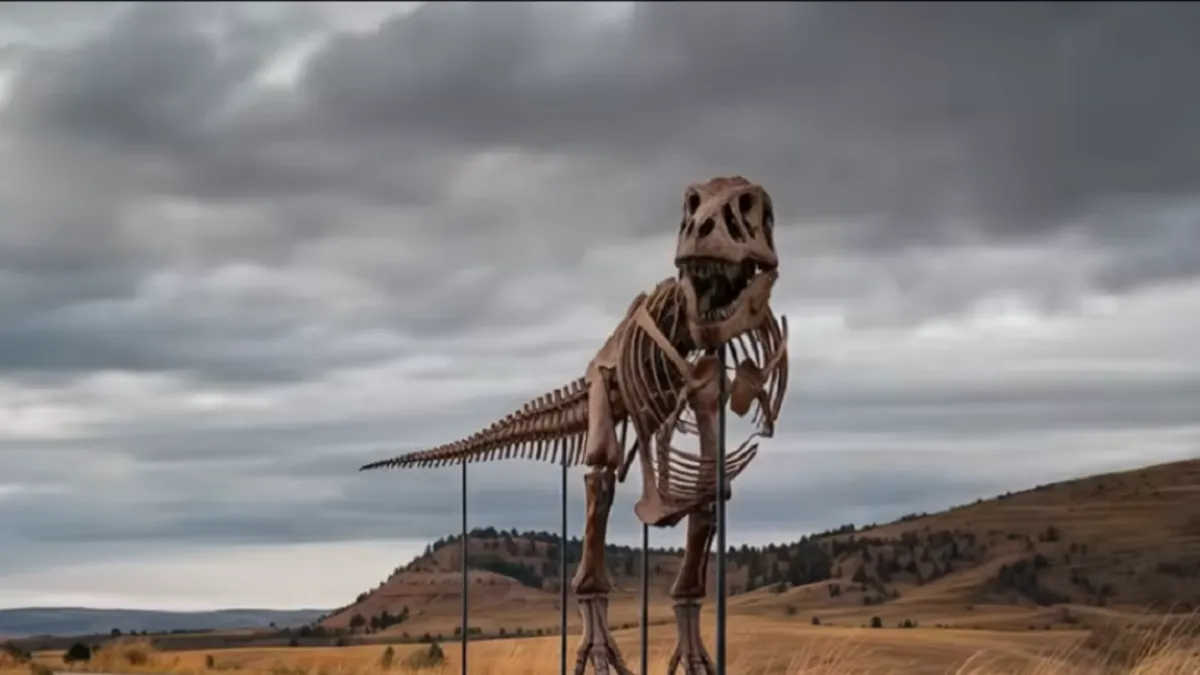
GLOBAL — A stir has engulfed the scientific community with the news of the auction of one of the largest Tyrannosaurus rex (T-Rex) skeletons ever discovered. This prehistoric fossil, valued at a staggering 30 million US dollars (approximately IDR 465 billion in 2026), is now being contested by private collectors. However, this move has sparked deep concern among paleontologists, who warn of a serious threat to scientific research and public access to this ancient heritage.
The opening of this auction, reportedly taking place at a prominent auction house in New York in 2026, immediately captured global attention. The as-yet unnamed specimen stands out due to its colossal size and exceptional completeness, making it one of the most important discoveries in paleontological history. Experts have long awaited the opportunity to thoroughly study its bone structure and unique characteristics.
However, research enthusiasm has now faded, replaced by anxiety. The scientific community, through various international paleontological organizations, has voiced strong protests. They fear that private ownership of such a large fossil will restrict researcher access, hinder data exchange, and potentially lead to the loss of vital, undocumented information.
"This is not just a collectible; it is a window into our planet's past," stated Professor Emilia Sato, a leading paleontologist from Cambridge University, in her virtual press conference. "When crucial fossils like this fall into private hands, we risk losing the opportunity to uncover the mysteries of evolution and ancient ecosystems. Limited access means hindered research, even data hidden forever."
The phenomenon of dinosaur fossil auctions fetching astronomical prices is not new. Previously, in 2020, a T-Rex skeleton named Stan sold for over 31 million US dollars. This trend, while profitable for discoverers and sellers, often presents an ethical dilemma for scientists striving to keep such fossils in the public domain or research institutions.
Another prominent case, such as the T-Rex fossil auction at Sotheby's some time ago, further underscores the urgency of this issue. Our previous article, titled "Fantastic Price! Most Complete T-Rex Skeleton Ready for Auction at Sotheby's" highlighted how the private market dictates the fate of natural heritage that should belong to all.
Paleontologists are urging for stronger legal mechanisms to ensure that important scientific discoveries like this T-Rex skeleton remain accessible to researchers and the general public. They propose the establishment of special funds or government regulations that prioritize acquisition by museums and educational institutions.
"Every bone fragment in this fossil contains invaluable genetic, biomechanical, and ecological information," added Dr. Budi Santoso, curator at the National Geological Museum of Indonesia. "Its loss from the public research domain would be a devastating blow to our understanding of dinosaurs, and this will be felt by future generations."
The debate surrounding the ownership of this massive fossil reflects the eternal conflict between commercial value and scientific value. For some collectors, owning rare fossils is a symbol of status and investment. For scientists, fossils are irreplaceable primary data sources for understanding the history of life on Earth.
Governments of various countries, including representatives from the European Union, have begun discussing potential regulations on the export and sale of important fossils to prevent the loss of this scientific heritage to the black market or closed private collections. However, implementing such policies is often hindered by legal complexities and economic interests. While awaiting the final decision on the fate of this colossal T-Rex skeleton, the scientific community continues to rally public support. They hope that awareness of the importance of open access to scientific discoveries can urge stakeholders to prioritize science over profit, for the common advancement of humanity in 2026 and beyond.