 Gabriella
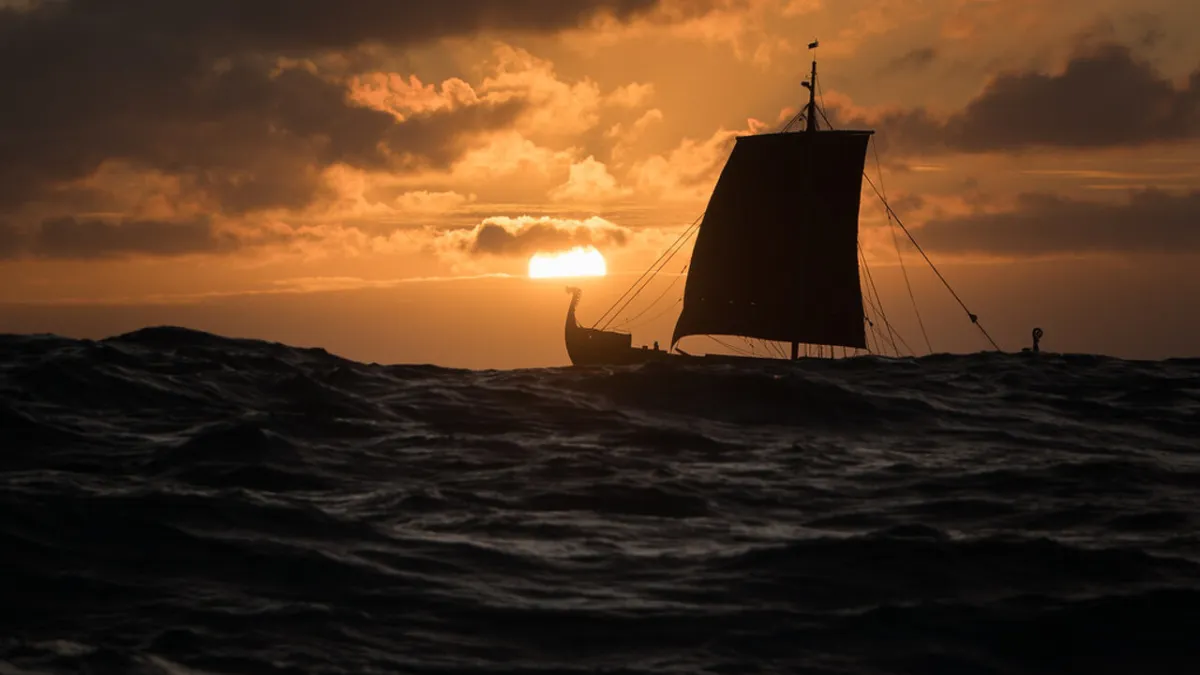
MEDITERRANEAN — An interdisciplinary team of researchers and cultural enthusiasts launched an ambitious expedition throughout 2026, determined to trace the legendary route of Ulysses (Odysseus). This epic exploration spans from Sicily in Italy, across the Mediterranean waters to Morocco, delves into the ancient territories of Turkey, and concludes in the heart of Greek civilization, the Peloponnese. Their primary mission is to separate myth from reality and identify key locations believed to be the settings for the film "Odyssey", while also providing new perspectives on Homer's classic tale. The expedition employs a combination of archaeological research, literary studies, and advanced geographical exploration.
The tale of Ulysses, the epic hero of Homer's "Odyssey", has captivated human imagination for millennia. His long journey back to Ithaca after the Trojan War, filled with encounters with mythological creatures and natural challenges, is often seen as a metaphor for life's journey. However, the core of this 2026 expedition lies in a fundamental question: how much of that narrative is rooted in real geography and history?
The main objective of this expedition is not merely to follow a fictional narrative, but to undertake geographical and archaeological verification. Experts aim to remap Ulysses' journey with modern precision, seeking physical evidence or topographical congruities that could substantiate the locations alluded to in the epic. The relevance of this expedition in the modern era is to preserve and enrich our understanding of classical cultural heritage.
SICILY — This largest island in the Mediterranean is believed to be one of Ulysses' crucial stopping points. The team will focus attention on the Cyclops' caves, the Strait of Messina with Scylla and Charybdis, and other locations mentioned in the story. In-depth research into local artifacts and Sicilian geology is expected to provide crucial clues regarding the existence of Ulysses' traces in the past.
MOROCCO — Ulysses' journey to North Africa, particularly to what is now Morocco, is one of the most debated parts of the epic. The expedition team will explore coastal and inland areas that may be relevant, searching for possible connections with ancient civilizations that interacted with the eastern Mediterranean world. This hypothesis opens up opportunities for new archaeological discoveries.
TURKEY — As a former territory of Troy and also part of ancient maritime routes, Turkey holds great potential for new discoveries. Researchers will investigate ancient sites on Turkey's western coast, looking for evidence of trade or migration that might relate to Ulysses' route. The link between Homer's narrative and Anatolian civilizations is a fascinating focal point.
PELOPONNESE — This peninsula in southern Greece is the heart of many ancient Greek myths and the gateway to Ithaca, Ulysses' homeland. Here, the expedition will reach its climax, with intensive research at archaeological sites and discussions with local historians. The Peloponnese serves as both a starting and ending point for a deeper understanding of Ulysses' mythological and geographical landscape.
The methodology of the 2026 expedition combines the use of advanced technologies such as underwater sonar scanning, drone mapping, and geospatial analysis with traditional research approaches. Collaboration between archaeologists, maritime historians, classical literature scholars, and geographers ensures a holistic approach to this quest.
The results of this expedition are expected to shed new light on Ulysses' route, possibly even identifying previously unconsidered sites. These findings will not only enrich the fields of archaeology and classical literary studies but also potentially alter our understanding of ancient navigation history and cultural interactions in the Mediterranean.
The impact of such an expedition extends beyond academia. Significant discoveries could boost cultural tourism to the visited regions, providing economic contributions and introducing historical heritage to a wider audience. This also strengthens global understanding of Mediterranean civilizations.
Italy, as one of the major Mediterranean countries, has strong ties to the legacy of Ulysses. Efforts to trace these footsteps align with various cultural preservation and celebration initiatives in the country, including exhibitions highlighting the resurgence of art in the 20th Century Italy Reborn in Rome. Such initiatives underscore the importance of re-examining the cultural roots that shape European identity.
Naturally, this long journey is not without its challenges. Diverse geographical conditions, security issues in some regions, and the complexity of interpreting ancient texts require extra perseverance and caution from the team. However, the drive to uncover the truth behind the myth remains the primary motivator.
The search for Ulysses' traces in 2026 symbolizes humanity's enduring quest to understand its origins and reaffirm its connection to the stories that shaped civilization. It is a bridge between a mythological past and a present rich with scientific inquiry, offering an enriching journey for anyone daring to sail with it.
This expedition is not merely a physical tracing, but also a profound intellectual journey. Researchers hope to inspire new generations to view mythology not just as folklore, but as a map to a richer understanding of human history and ancient world geography. It is a bold endeavor to bring legend into the spotlight of science, ensuring Ulysses continues to live in our collective narrative.
From the windy shores of Sicily to the historic lands of the Peloponnese, each location holds a piece of the puzzle to be assembled. Discoveries at each stop are expected to add new layers to the already rich story, verifying forgotten or misinterpreted parts, and even uncovering entirely new aspects of the hero's journey.
MOROCCO — On the western side of the Mediterranean, Ulysses' stop in Morocco is believed to offer unexpected connections to ancient Carthaginian civilizations or early Berber tribes, adding a multicultural dimension to his epic route. This is a golden opportunity to explore ancient interactions rarely documented in written history.
Experts will also consider the impact of climate and geological changes over millennia that may have altered the original landscape. Understanding these environmental shifts is crucial for accurately comparing ancient descriptions with current topography, adding complexity but also depth to the research.
This exploration is expected to culminate in late 2026, with the initial publication of significant findings. The results will not only be presented in academic journals but also through documentaries and interactive digital platforms, allowing a global audience to participate in this extraordinary journey of discovery.
This project is tangible proof that even in the 21st century, ancient stories still have the power to inspire new explorations and challenge the boundaries of our knowledge. Ulysses, through this expedition, sails again, bringing with him the hope for a deeper understanding of our historically rich world.
Ultimately, the Ulysses 2026 expedition reaffirms that myth and science can go hand in hand, complementing each other in the search for truth. It is a dedication to the heritage of civilization, a promise to keep asking questions, and a commitment to uncover secrets hidden within the annals of time.
This adventure, connecting epic narratives with geographical realities, has the potential to change the way we view history and literature. With every step and every finding, the expedition team hopes to bring Ulysses back to the forefront of global cultural and scientific discourse.
Great hopes are placed on this expedition not only to confirm, but also to challenge some long-held assumptions about Ulysses' journey. It is an attempt to view myth through the eyes of a scientist, while still honoring the wonder it contains.