 Edward DP Situmorang
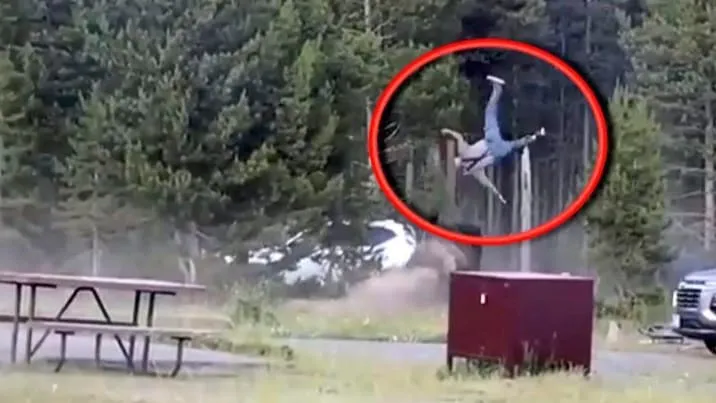
Yellowstone — A shocking incident has once again rocked Yellowstone National Park, United States, recently. An elderly tourist, 65 years old, sustained serious injuries after being gored and tossed high into the air by a 900-kilogram adult male bison. This terrifying event was captured in a widely circulated video, reigniting serious discussions about visitor safety in wildlife conservation areas.
The incident occurred when the tourist, whose identity was not fully disclosed, was near a group of trees. Without clear warning, the bison suddenly chased and attacked, lifting the victim with its horns and throwing him several meters upwards.
Yellowstone National Park authorities immediately responded to the incident, providing first aid to the victim before he was rushed to a nearby medical facility. The victim's condition is reported as stable but he sustained several serious injuries requiring intensive care.
Yellowstone National Park spokesperson, Maya Chen, in a virtual press conference today, expressed deep concern over the incident. “We constantly emphasize the importance of maintaining a safe distance from wildlife. Bison, though seemingly calm, are incredibly powerful and unpredictable wild animals,” said Chen. She added that warning signs and safety guidelines are posted throughout the park.
Bison are one of Yellowstone's iconic wildlife species, but they are also the most common cause of serious injuries to park visitors. Each year, several incidents of bison attacking humans are reported, often because tourists get too close to take photos or attempt to interact.
Conservation experts and park law enforcement always remind tourists to adhere to safe distance rules: a minimum of 23 meters (75 feet) from bison and elk, and 91 meters (100 yards) from bears and wolves. Violating these rules not only endangers human lives but can also disrupt the welfare of wildlife.
This incident occurred amidst an increase in national park visits post-pandemic, especially in this year 2026, leading to higher visitor density in some areas. This density potentially increases unwanted interactions between humans and wildlife, an issue aligned with global environmental challenges such as the impact of extreme climate crisis affecting Europe.
The video of the incident shows the bison chasing the victim through bushes before launching a brutal attack. This underscores the speed and strength possessed by these hundreds of kilogram animals, and how quickly a situation can turn from peaceful to dangerous.
Park rangers continue to patrol and provide direct education to visitors. They hope this incident serves as a serious reminder to every individual about the dangers of ignoring conservation warnings. Safety is a shared responsibility between park management and every visitor.
“We urge all visitors to read and understand the available safety guidelines. Wise and respectful behavior towards nature is key to enjoying Yellowstone's beauty without endangering oneself or wildlife,” Chen added.
Yellowstone National Park operates under a “let nature take its course” policy, aiming to minimize human intervention in the ecosystem. However, this policy also demands a high level of awareness from visitors not to disturb this natural balance.
Wildlife expert from the University of Wyoming, Dr. David Miller, highlighted that bison are highly territorial animals, especially during mating season or when they have calves. “Approaching them, even with good intentions, can be perceived as a threat. Their reaction is self-defense,” explained Dr. Miller in a separate interview.
Similar incidents are not uncommon. Data from recent years show an increasing trend of negative interactions between humans and bison, coinciding with a rise in visitor numbers seeking closer experiences with nature.
The park plans to intensify its safety education campaigns across various platforms, including social media and interactive information boards at park entrances. The goal is to ensure every visitor understands the risks and how to avoid them.
Local government has also voiced support for Yellowstone's efforts in ensuring visitor safety. They emphasize that nature tourism is a valuable asset but must be balanced with strict safety and conservation priorities.
This incident in Yellowstone serves as an important reminder for all tourists worldwide. Enjoying the beauty of the wild must always be accompanied by respect, vigilance, and adherence to applicable rules for mutual safety. Do not let beautiful moments turn into regrettable tragedies.